Dock Safety Standards Every Mineral, VA Warehouse Should Get Right
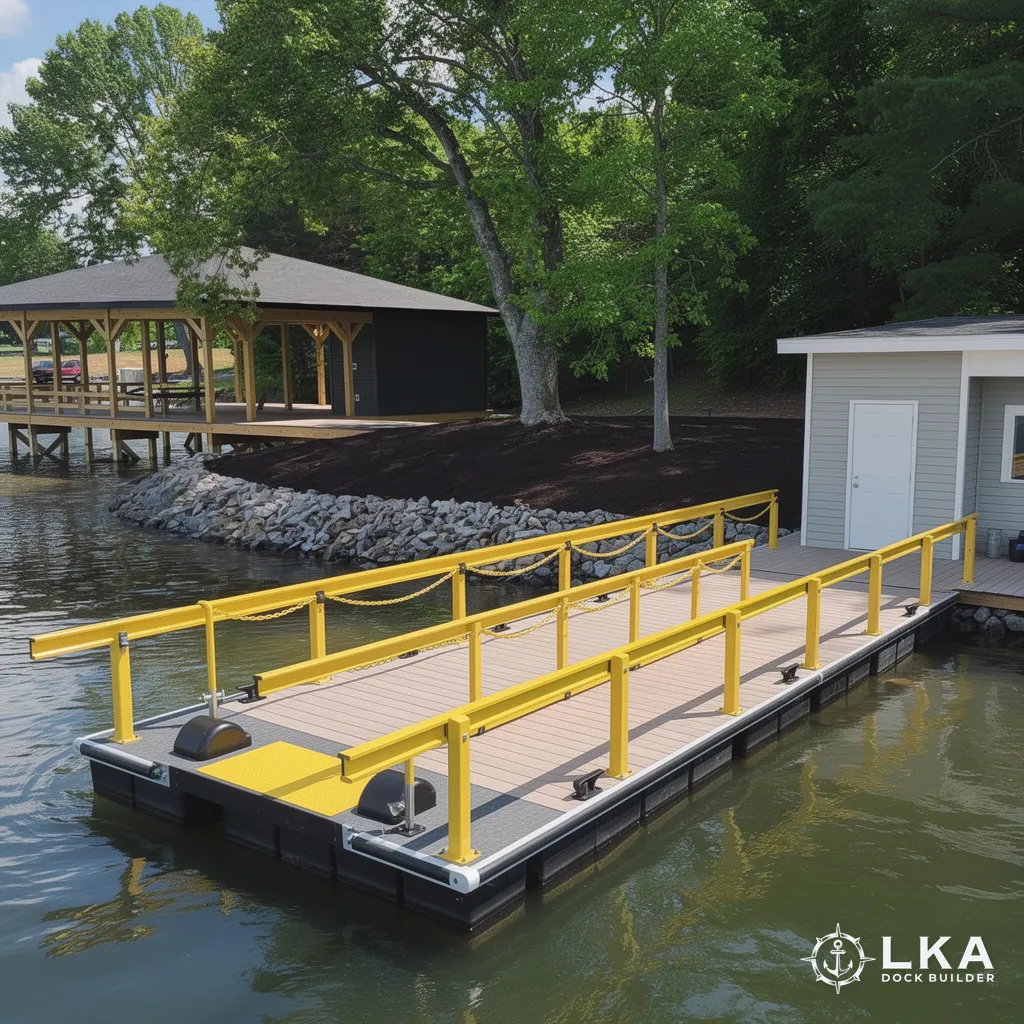
Loading dock safety compliance requires OSHA-compliant dock levelers, vehicle restraint systems, and safety barriers inspected regularly for wear, all aligned with OSHA loading dock requirements. LKA Dock Builder, based in Mineral, VA, installs and maintains equipment meeting ANSI MH14.1 standards, ensuring proper lighting, signage, guardrails. Employee training to prevent falls, trailer creep, and forklift accidents at dock edges.
Loading dock compliance requires maintaining safe distance from dock edges, painting edges for visibility, keeping surfaces clean and dry, and training operators on equipment like forklifts and dock levelers—critical given U.S. transportation moved 53.6 million tons of freight daily in 2021, per the Bureau of Transportation.
Loading dock safety compliance requires standardized lockout procedures, dock plate inspections, and clear traffic separation between pedestrians and equipment. Facilities managers across industries handling freight—part of a system moving roughly 53.6 million tons daily nationwide—must enforce training, signage, wheel chocks, and fall-protection barriers to reduce injuries, downtime, and OSHA violations at high-traffic dock zones.
Key Takeaways
- Loading docks rank among the highest-risk warehouse environments where people, equipment, and transportation converge simultaneously.
- Forklift operators must maintain safe distances from dock edges to prevent falls and serious injuries.
- Wet or icy conditions create skidding hazards that require immediate attention and preventive maintenance protocols.
- LKA Dock Builder in Mineral, VA provides compliant loading dock solutions for warehouses and distribution centers.
What Do You Need Before Auditing Dock Safety?
Three items precede any dock audit: current injury and incident records, an equipment inventory, and a clear picture of daily freight volume through the facility. Loading docks rank among the most active and high-risk zones in a warehouse. Workers, forklifts, and incoming trucks converge in a tight, fast-moving space. Skipping preparation means the audit misses the pressure points that actually cause incidents.
Facilities leads should treat this groundwork as a compliance necessity, not a formality. The U.S. Bureau of Labor Statistics consistently places transportation and warehousing among the industries with the highest injury exposure, which is precisely why loading dock safety best practices start with data, not guesswork. Scale matters, too: the U.S. transportation system moves an average of 53.6 million tons of freight daily, valued at more than $54 billion, so even a mid-sized facility handles constant, high-volume traffic through its dock doors.
What records should a safety coordinator gather first?
Pull the last twelve months of incident reports, near-miss logs, and equipment maintenance tickets. Cross-reference these against shift schedules to spot patterns tied to peak freight periods.
Why does operator training belong in the audit scope?
Training records reveal whether staff actually understand equipment operation and dock protocols. Thorough dock safety training remains one of the most effective accident-prevention tools available. Auditors should confirm it before evaluating hardware or layout changes.
How Do You Apply Dock Safety Standards Step by Step?
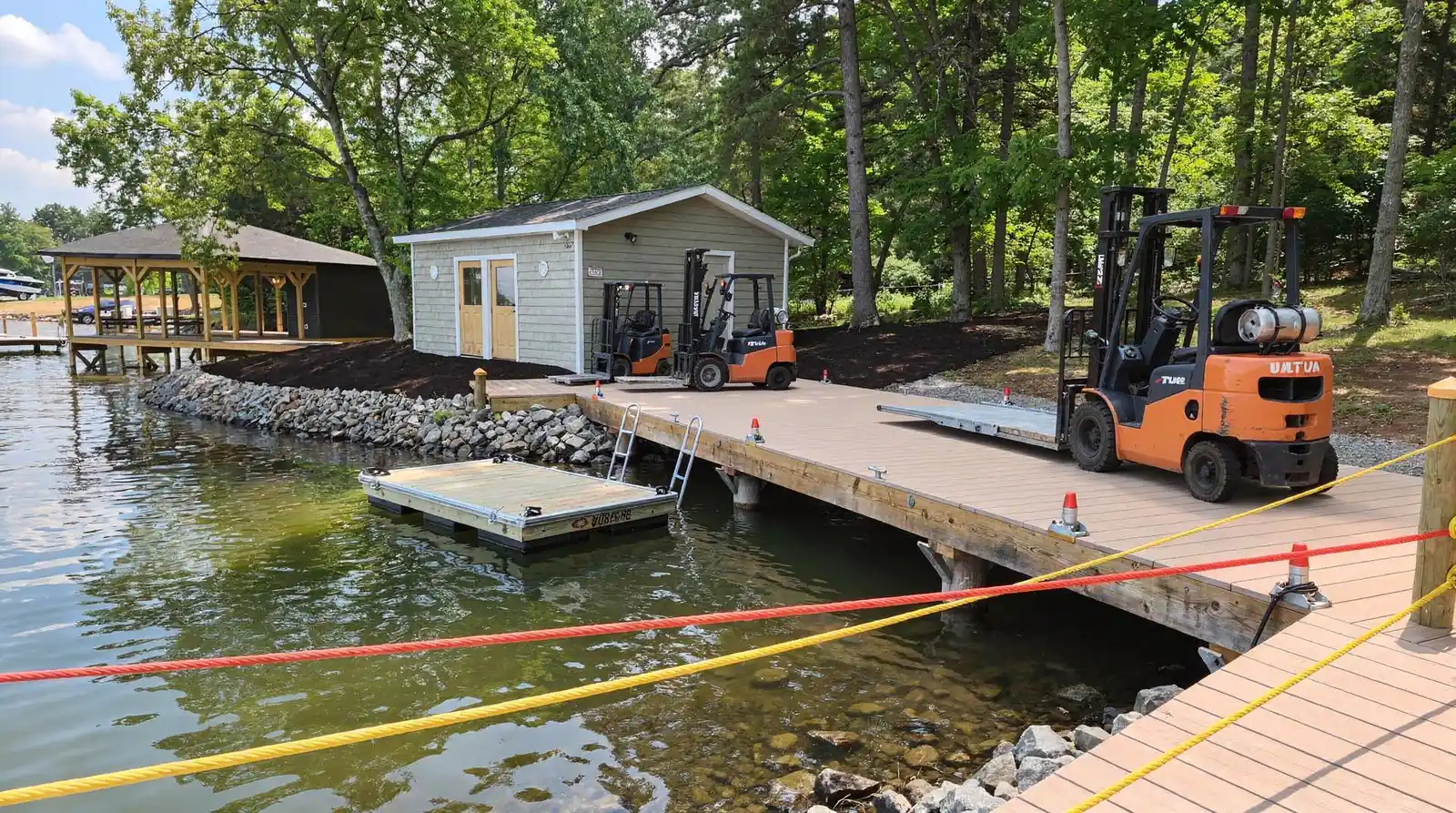
Applying a loading dock safety checklist requires a sequenced approach, not a single checklist item. Facilities that skip steps or handle them out of order create gaps that can lead to forklift accidents, edge falls, and slip injuries take root. A structured, five-step process closes those gaps and gives safety coordinators a repeatable framework for every shift.
- Verify operator competency first. Confirm every operator understands how to control dock levelers, forklifts, and other loading equipment before assigning them to the dock. Competency review is the foundation; nothing downstream matters if the person behind the controls doesn’t know the machine.
- Enforce a safe distance from the dock edge. Require operators to maintain clearance from the loading dock’s edge during every maneuver, loaded or empty.
- Train crews on tail swing awareness. Equipment turning near the edge creates a swing radius that catches workers off guard. Building this habit into daily routines reduces contact incidents significantly.
- Keep working surfaces clear and clean. Debris, spills, and clutter on the dock floor turn routine movement into a slip-and-fall risk.
- Paint dock edges for visibility. Clearly marked edges give operators and pedestrians a visual cue that reduces edge-related falls.
Why does step order matter for dock safety compliance?
Sequencing matters because later steps depend on earlier ones holding firm. An untrained operator ignoring edge clearance defeats the purpose of painted markings. Facilities that run these steps in order build layered protection rather than isolated fixes.
What happens when facilities skip a step?
Skipping operator verification or edge-distance enforcement raises the odds of dock-edge falls and equipment collisions. Gaps compound quickly once one safeguard fails, putting workers and freight schedules at risk.

What Mistakes Break Dock Safety Compliance Later?
Compliance failures rarely start big. A worn edge marking, an unsalted ramp, an undertrained forklift operator. These small oversights are common loading dock hazards that compound into serious incidents and OSHA citations. Facilities that treat loading dock safety best practices as a one-time checklist, rather than a daily discipline, are the ones that watch these gaps widen into real liability.
The recurring failure points include:
- Skipping edge protection, which leaves crews exposed to falling off the dock during loading operations.
- Ignoring weather-related surface hazards, allowing skidding or slipping on wet or icy platforms.
- Cutting emergency-response training short, so operators hesitate when equipment malfunctions or a worker gets hurt.
- Loosening enforcement of PPE and standardized loading procedures, which quietly unravels an otherwise solid protocol.
Why do dock safety programs fail over time?
Programs erode when training becomes a one-time event instead of an ongoing requirement. Supervisors who stop reinforcing emergency procedures leave crews unprepared when a real malfunction or injury occurs on the dock floor.
Prioritizing loading dock safety compliance protects your team, equipment, and operational efficiency. By implementing proper maintenance schedules, installing appropriate safety features, and training personnel thoroughly, you establish a secure environment that minimizes accidents and liability. Our expert team at LKA Dock Builder understands these critical requirements and delivers solutions engineered for both safety and longevity. Investing in compliant dock infrastructure today ensures reliable performance and peace of mind for years to come.
Essential Safety Best Practices for Loading Docks
What items precede a loading dock safety audit?
Gather the last twelve months of incident reports, near-miss logs, and equipment maintenance tickets, plus an equipment inventory and daily freight volume data, then cross-reference records against shift schedules.
What is the first step in applying dock safety standards?
Verify operator competency by confirming every worker understands how to control dock levelers, forklifts, and other loading equipment before assigning them to dock duties.
What everyday hazards do loading dock best practices address?
Best practices address safe distances from dock edges, painted edge visibility, clean and dry surfaces, wheel chocks, fall-protection barriers, and clear traffic separation between pedestrians and equipment.