
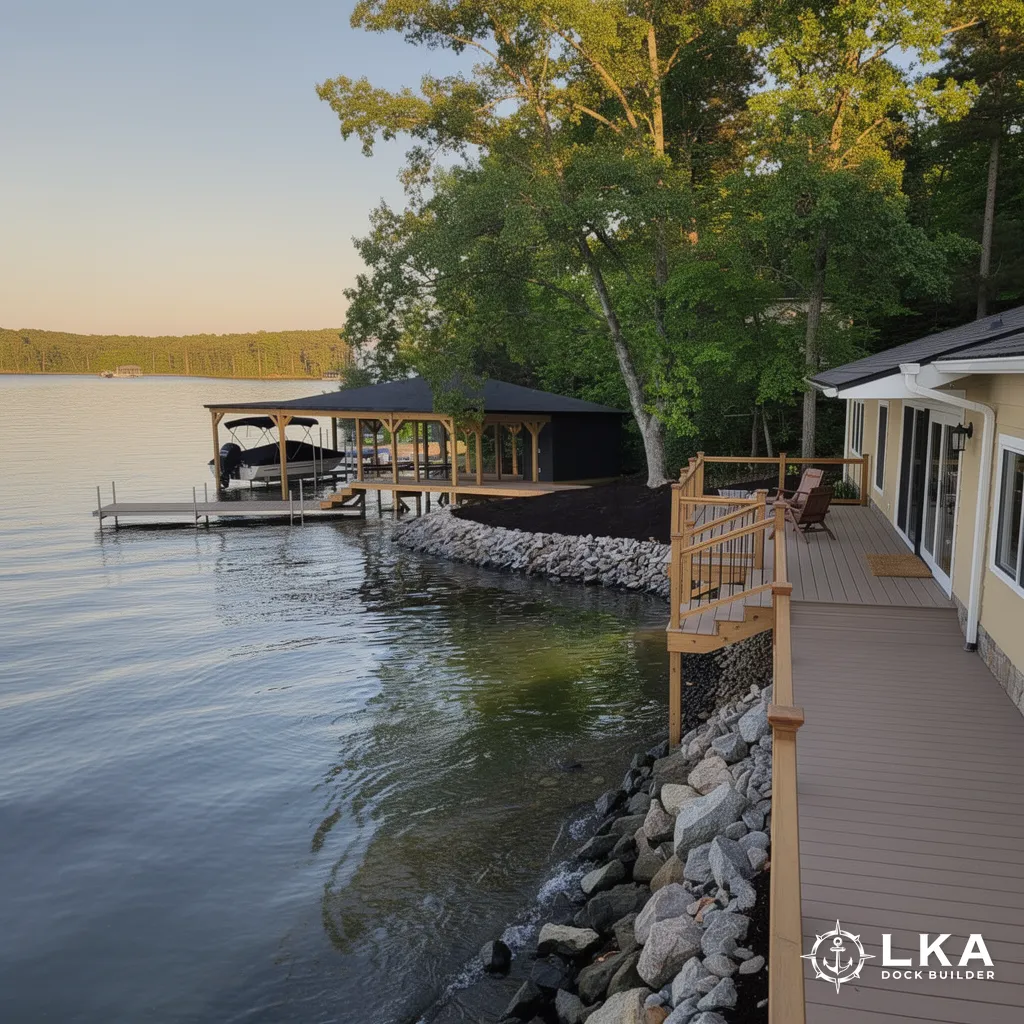
Deck vs. Dock: Do You Need Both at Your Lake Anna Property?
Deck vs. dock isn’t an either-or question for most Lake Anna properties, since the two structures serve genuinely different purposes. This guide breaks down what a deck does versus what a dock does, when a property realistically needs one, the other, or both, and how LKA Dock Builder approaches that decision with homeowners across the Lake Anna area.
Key Takeaways
A dock is built for water access, giving a property a place to moor a boat, swim, fish, or spend time directly on the water.
A deck is an outdoor living space typically attached to the house, built for entertaining, relaxing, and everyday outdoor use that doesn’t require water access.
A property with waterfront access but no dock is missing direct water use, even if it already has a comfortable outdoor living space.
A property with a dock but no deck often has water access without a comfortable place near the house to relax before or after using it.
Decks can be built as their own standalone structure or connected to a dock, depending on the layout of the property and how the space will be used.
LKA Dock Builder helps Lake Anna homeowners evaluate both options as part of a single conversation about how they actually use their property.
What’s the Difference Between a Deck and a Dock?
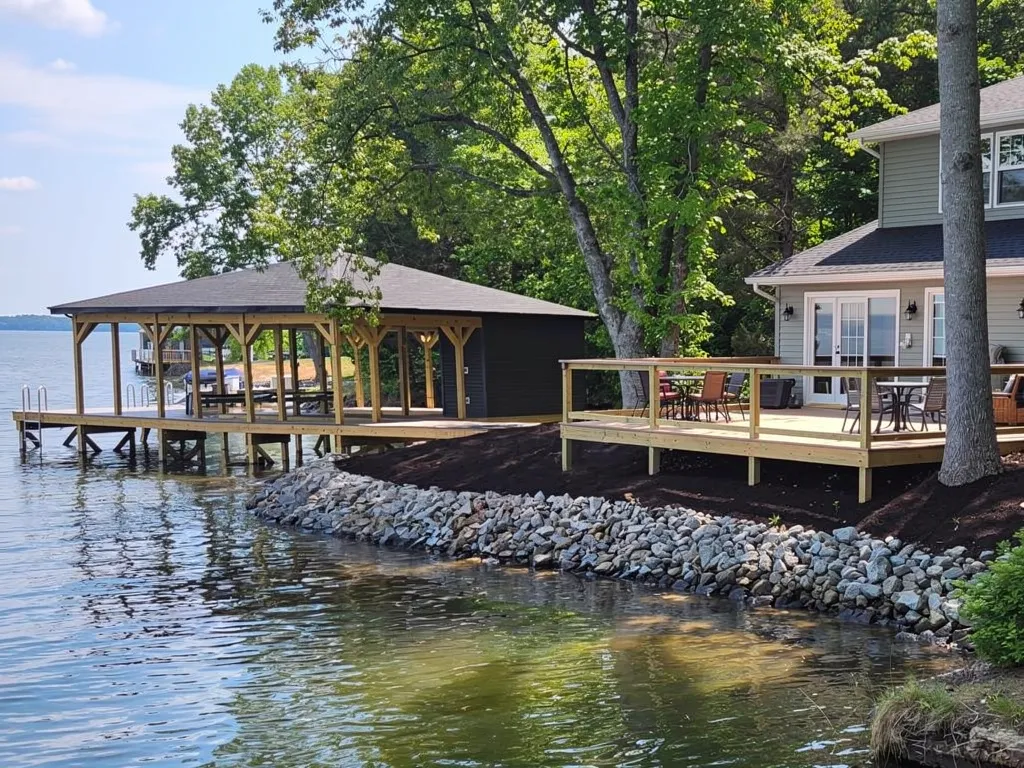
A dock is a structure built out over the water, designed for boat mooring, swimming access, fishing, and general waterfront activity. A deck, by contrast, is typically an outdoor living space attached to or near the house, built for entertaining, relaxing, and everyday outdoor use that doesn’t require direct water access. The two aren’t interchangeable: a deck doesn’t give a homeowner a place to tie up a boat, and a dock doesn’t provide the kind of comfortable, house-adjacent outdoor living space a deck offers.
Do You Need a Dock If You Already Have a Deck?
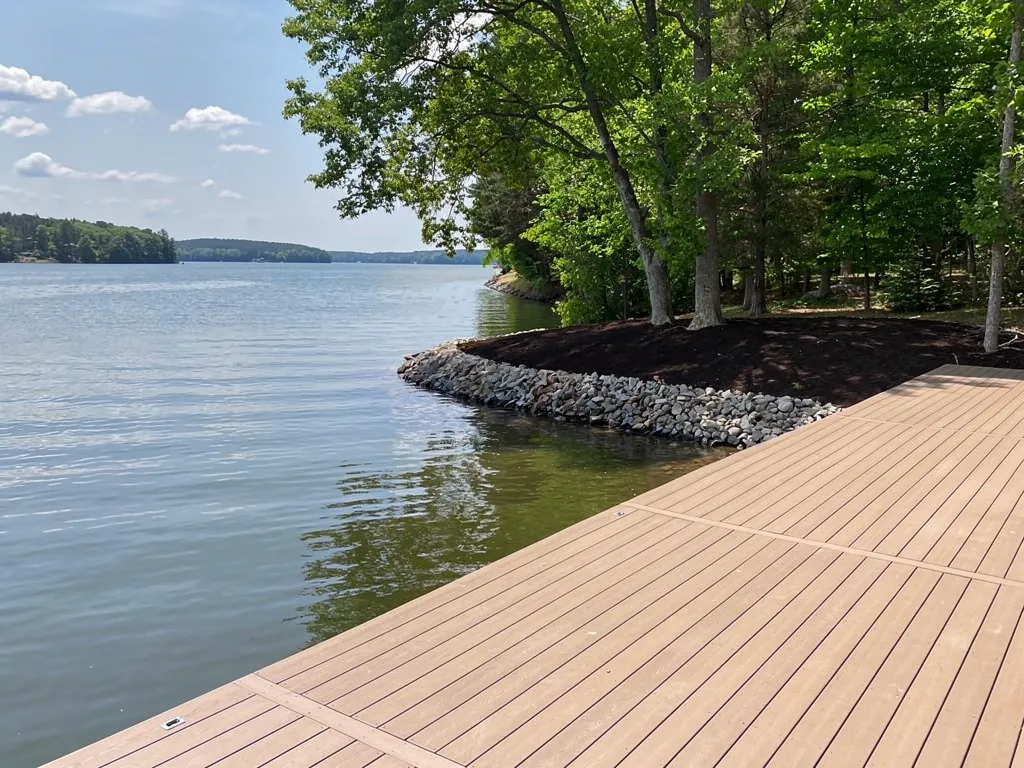
If a Lake Anna property has waterfront access but no dock, a deck alone doesn’t replace what a dock provides. A dock is what actually puts a homeowner on the water, whether that means mooring a boat, launching a kayak, fishing off the end of it, or having a stable place to swim from rather than a rocky or muddy shoreline. A homeowner who bought a waterfront property specifically to use the lake, rather than just look at it, generally still needs a dock even with a well-built deck already in place.
Do You Need a Deck If You Already Have a Dock?
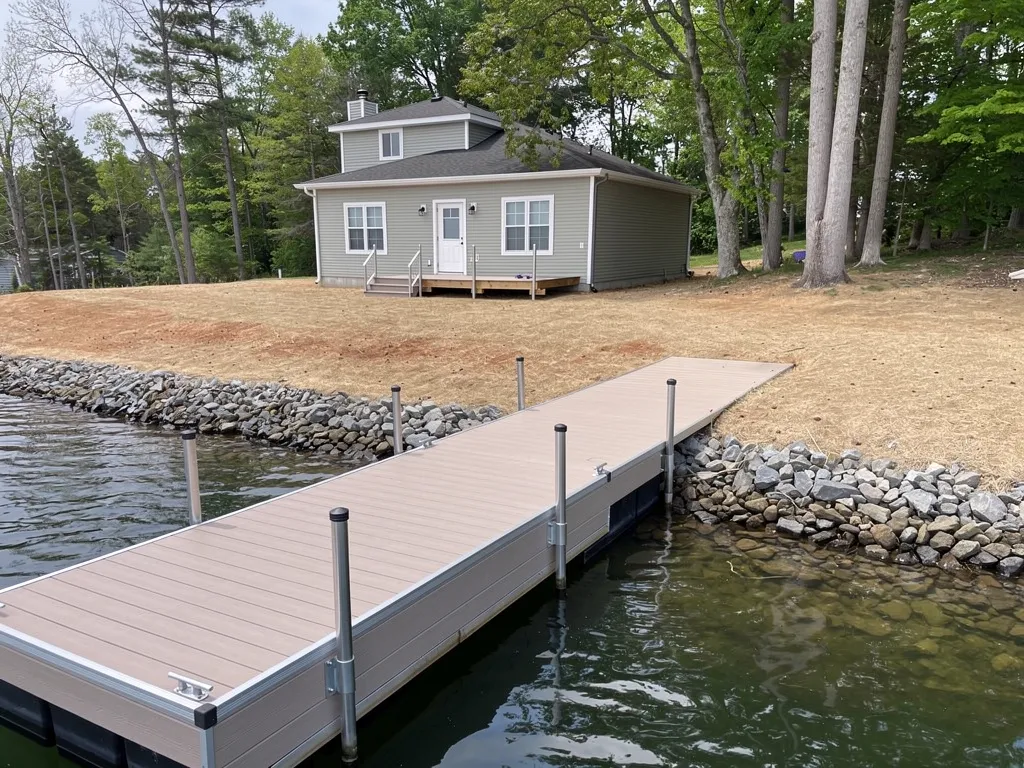
The reverse is just as common. A property with a dock but no deck often has good water access without a comfortable outdoor living space near the house itself. That gap tends to show up in everyday use: there’s nowhere shaded or furnished to sit before heading down to the dock, nowhere central for a group to gather that isn’t right at the water’s edge, and no real transition space between the house and the shoreline. A deck fills that role, giving a property a functional outdoor space that isn’t dependent on being directly on the water.
Can a Deck Be Connected to a Dock at Lake Anna?
Yes. LKA Dock Builder builds decks both as standalone structures and as part of a combined dock project, using the same 3D design approval process either way. A deck connected to a dock generally follows the same Dominion Energy shoreline permitting process required for the dock itself, while a standalone deck attached to the house typically falls under local county building codes instead; LKA Dock Builder’s dedicated guide on custom deck cost at Lake Anna covers that permitting distinction and its cost implications in more depth.
How to Choose Between a Deck, Dock, or Both at Lake Anna
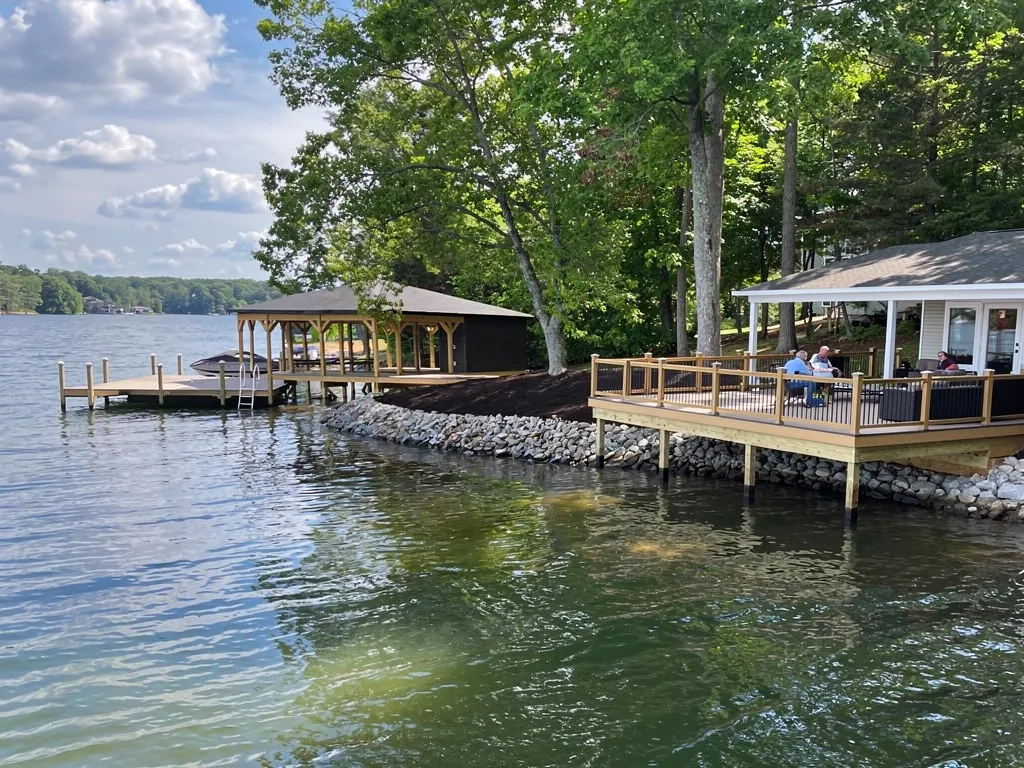
The right answer depends on how a homeowner actually uses, or wants to use, their property. A homeowner focused primarily on boating, fishing, or swimming generally prioritizes a dock first, since that’s what makes those activities possible at all. A homeowner more focused on entertaining, relaxing outdoors, or having a comfortable transition space between the house and the shoreline often gets more immediate value from a deck. Many Lake Anna properties, particularly ones purchased as full-time or vacation homes rather than purely as boat-access points, end up needing both over time: a dock for water access and a deck for everyday outdoor living, whether built as two separate projects or combined into one.
Site layout matters too. A steep or heavily wooded lot may make a combined dock-and-deck project more practical to plan and build together, since the design and permitting work can be coordinated in a single project rather than two separate ones built years apart. A flatter, more open lot might make it easier to prioritize one now and add the other later without disrupting an already-established piece of the property.
Frequently Asked Questions
Do I Need Both a Deck and a Dock at My Lake Anna Property?
Not necessarily, but many Lake Anna homeowners eventually want both: a dock for direct water access and a deck for everyday outdoor living near the house. Which one to prioritize first depends on how the property is actually used.
Which Should I Build First, a Deck or a Dock?
It depends on the homeowner’s priorities. A dock comes first for someone focused on boating, fishing, or swimming, while a deck comes first for someone who wants a comfortable outdoor living space before tackling waterfront construction.
Can LKA Dock Builder Build a Deck and a Dock as One Combined Project?
Yes. LKA Dock Builder builds decks connected directly to docks as well as standalone decks, using the same design and permitting process appropriate to each.
Does a Deck Attached to a Dock Cost More Than a Standalone Deck?
Cost depends on the specific project, but a dock-attached deck is often part of a larger combined build, which changes the overall project scope compared to a standalone deck built entirely on its own.
Tired of a waterfront property that only half works for you, whether that’s a dock with nowhere comfortable to gather nearby or a deck that never gets you onto the water? LKA Dock Builder helps homeowners across Mineral, Louisa, Spotsylvania, and the rest of the Lake Anna area close that gap, building the dock, the deck, or both, so the property finally works the way it was meant to.