
Choosing the Right Professional Seawall Installation Contractors
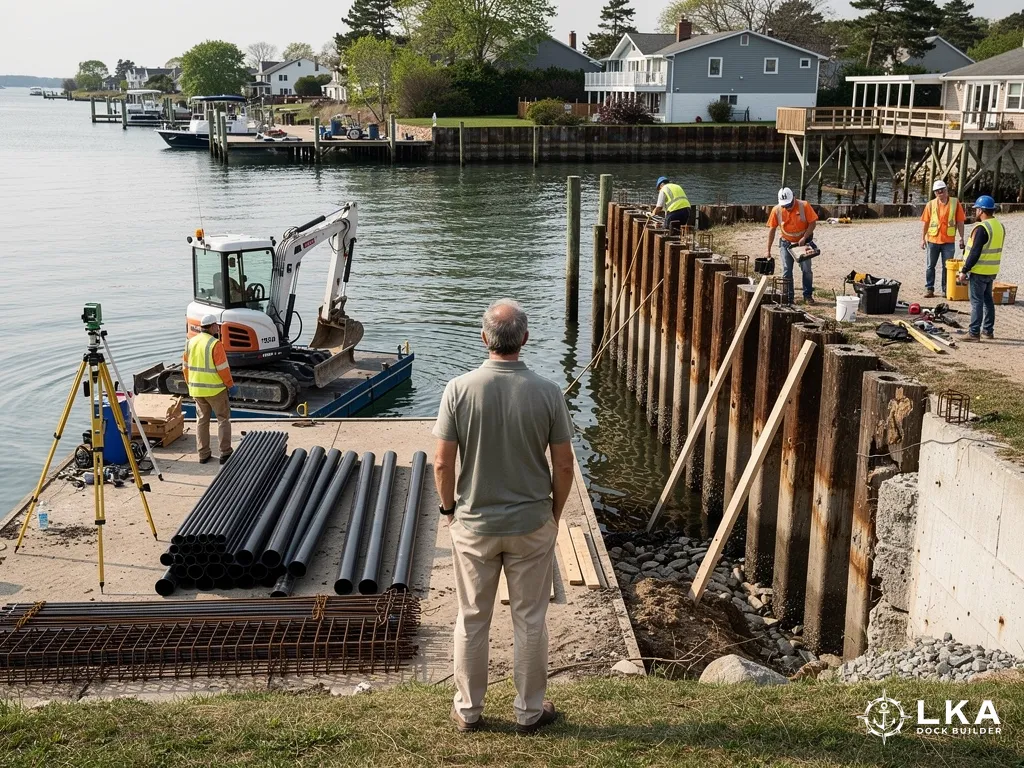
Choosing a seawall contractor demands careful seawall construction vetting, starting with marine construction licensing, insurance coverage, and specialized Lake Anna experience. A simple marine contractor checklist helps property owners evaluate contractors on material expertise, including concrete, vinyl, and rip rap stabilization. Qualified contractors demonstrate proficiency with erosion control solutions and local shoreline regulations. LKA Dock Builder is among the licensed, insured shoreline stabilization contractors serving Louisa, Mineral, Spotsylvania, and Orange counties, with seawall contractor licensing and insurance verified on every project.
Key Takeaways
Verify marine construction licensing and insurance coverage before hiring any seawall contractor.
Evaluate contractor expertise with concrete, vinyl, and rip rap stabilization for shoreline projects.
Confirm the contractor conducts a shoreline evaluation for soil stability before finalizing designs.
Request references from previous Lake Anna waterfront projects and inspect finished seawalls in person.
Why does the contractor type matter?
A seawall protects lakefront property from erosion and preserves valuable land. The contractor hired for this work directly determines the quality, durability, and long-term success of the project. Seawalls face constant exposure to water, waves, and erosion forces that cause wear over time. Without specialized expertise, even premium materials fail prematurely. Property owners lose both their investment and the shoreline protection they depend on.
What makes seawall construction different from general contracting?
Seawall installation is a complex process requiring site-specific engineering knowledge. A Professional Seawall Installation Contractor evaluates soil stability, water depth, and wave action before construction begins. General contractors lack this specialized training. The result is often improper anchoring, inadequate drainage, and early structural failure. LKA Dock Builder brings 37 years of combined construction experience to every waterfront project, ensuring each seawall meets the unique demands of Lake Anna’s shoreline conditions.
How does contractor expertise affect long-term costs?
Hiring the wrong contractor multiplies expenses through premature repairs and replacement. Seawalls deteriorate from water seepage, soil erosion, and storm surges when built incorrectly. A qualified contractor installs proper drainage systems and uses materials suited to local conditions. This prevents the hidden damage that leads to bulging sections, cracks, and eventual collapse. The upfront savings from an inexperienced builder vanish quickly when repairs begin within the first few years.
LKA Dock Builder’s approach to seawall construction in Mineral, VA follows a structured process that includes site preparation, precise alignment, and thorough backfilling. Each step addresses the specific erosion patterns found on Lake Anna properties. The company’s team understands that lakefront seawalls face different stresses than ocean installations. Their methods account for fluctuating water levels, ice damage, and soil composition unique to Central Virginia.
What credentials should you verify first?
Verifying credentials protects waterfront property owners from costly structural failures. A licensed contractor demonstrates compliance with local building codes and shoreline regulations. Professional seawall installation contractors must hold valid marine construction licensing before any work begins on Lake Anna property.
Licensing serves as the first gatekeeper. Only hire a company that is licensed, which ensures the contractor understands proper construction methods and follows local rules. LKA Dock Builder operates as a licensed and insured contractor serving Bumpass, Mineral, Spotsylvania, and Orange counties.
What insurance coverage should a seawall contractor carry?
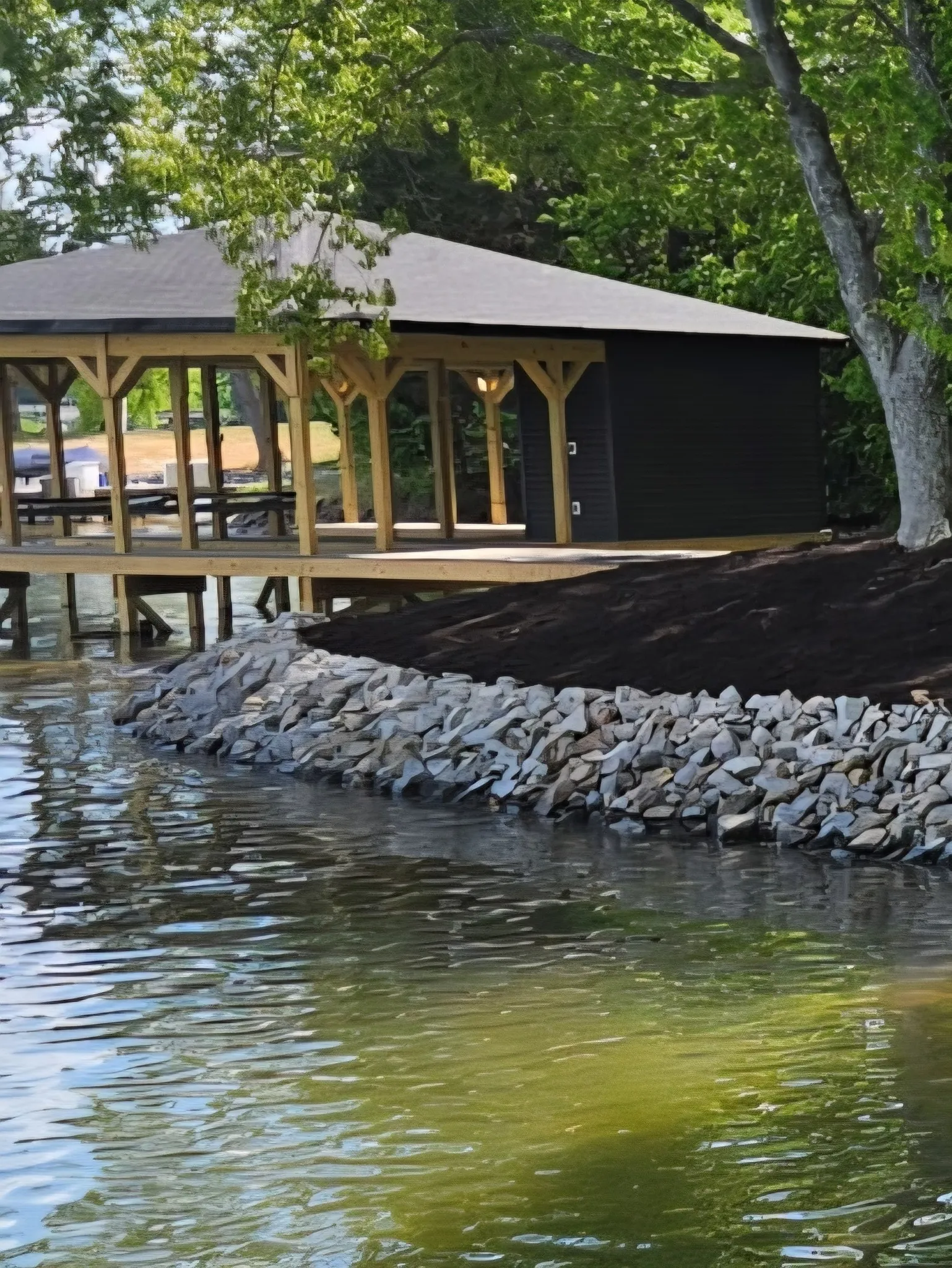
Insurance coverage protects property owners from liability during construction. Proper verification of marine construction licensing, insurance coverage, and environmental certifications ensures compliance with regulations. Contractors should demonstrate proficiency with the specific materials and techniques required for shoreline work, including concrete, vinyl, and rip rap stabilization methods suited to Lake Anna’s conditions.
How do you confirm a contractor’s track record?
Look for a contractor with a proven track record and a stable team. A history of completed projects demonstrates reliability, consistency, and the ability to meet both timelines and quality expectations. Before signing any agreement, property owners should request a comprehensive estimate for seawall construction that itemizes materials, labor, and permitting costs. Skipping credential verification leaves owners exposed to uninsured damage claims and substandard workmanship that fails within a few seasons.
How do you evaluate local shoreline expertise?
Evaluating local shoreline expertise determines whether a seawall lasts decades or fails within a few seasons. Proper vetting identifies contractors who understand soil stability, environmental regulations, and erosion patterns unique to Lake Anna.
What specific knowledge of Lake Anna shoreline conditions should contractors demonstrate?
Lake Anna’s clay-heavy soils and fluctuating water levels create distinct challenges absent from coastal environments. Seawall Installers must show familiarity with these conditions. In South Florida, for example, coastal challenges demand knowledge of soil conditions and tidal impacts. The principle applies equally here: localized expertise prevents structural weaknesses that generic designs overlook. Professional seawall installation contractors assess soil composition before specifying materials.
How can property owners verify a contractor’s material and technique proficiency?
A rigorous evaluation requires proof of hands-on experience with the materials best suited to Lake Anna’s shoreline. Contractors demonstrate proficiency with concrete restoration, vinyl installation, and erosion control solutions. Match their portfolio to your site’s demands.
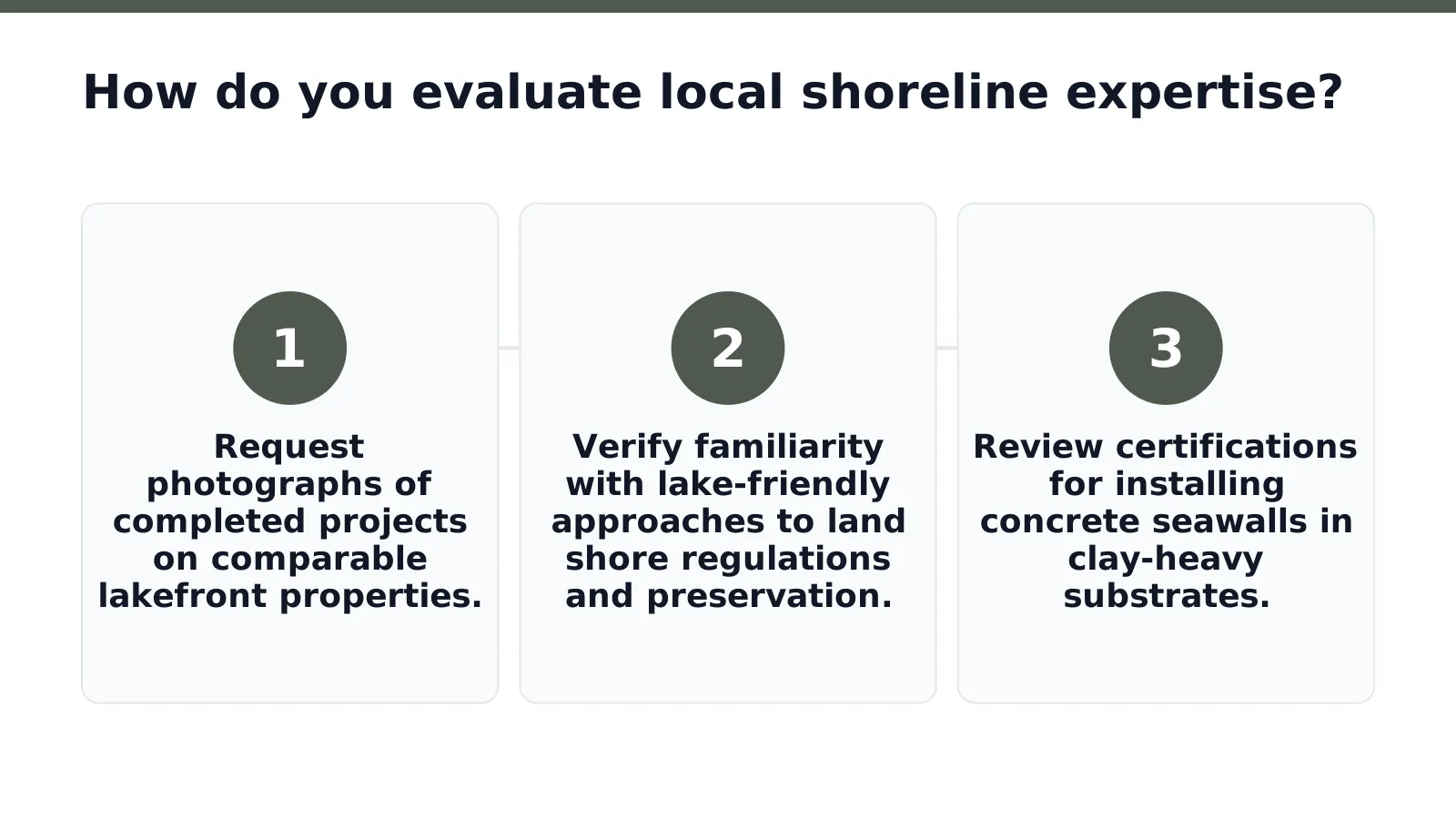
One. Request photographs of completed projects on comparable lakefront properties.
Two. Verify familiarity with lake-friendly approaches to land shore regulations and preservation.
Three. Review certifications for installing concrete seawalls in clay-heavy substrates.
LKA Dock Builder evaluates soil stability and environmental impact during every site assessment. This ensures the seawall design meets specific site requirements rather than relying on assumptions. Skipping this step invites erosion behind the wall.
Do local regulations affect seawall design decisions?
Lake Anna’s shoreline regulations impose specific setbacks and environmental protections. A qualified contractor navigates these without delay. Lake Anna marine construction services encompass permitting guidance alongside physical installation. LKA Dock Builder’s lake-friendly approach respects land shore regulations while preserving structural integrity. Homeowners who overlook regulatory compliance risk costly rework or fines. Contractors must demonstrate proficiency with erosion control solutions and local shoreline regulations to ensure designs meet all applicable requirements.
What should the installation process include?
A proper seawall installation follows a structured sequence of site preparation, structural assembly, and final stabilization. Skipping any phase compromises the wall’s ability to withstand Lake Anna’s constant wave action and soil pressure.
What happens during site preparation?
Before construction begins, the site is cleared and prepped to ensure a smooth installation process. Crews remove debris, vegetation, and unstable soil from the shoreline. A wood drive guide is installed to establish the wall’s front alignment and elevation. This guide serves as the critical reference point for every sheet driven afterward.
How is the seawall structure built?
Drive the primary sheets. Steel, vinyl, or composite sheets are driven into the soil to form the primary structure of the seawall. Each sheet interlocks with the next to create a continuous barrier against erosion.
Secure the anchoring system. Tieback rods and deadmen anchors are installed behind the wall. These components counteract the lateral force of the retained soil.
Install the cap and drainage. A concrete or composite cap is poured along the top to lock the sheets together. Weep holes or drainage panels are integrated to relieve hydrostatic pressure.
LKA Dock Builder uses a 3D design approval process before installation begins. This step lets property owners visualize the finished wall’s alignment, height, and relationship to existing docks or boathouses. Professional seawall installation contractors then execute the plan with precision.
The final phase involves backfilling with clean granular material and grading the upland area. Proper compaction behind the wall prevents future settlement. For Lake Anna properties, the company’s seawall installation and repair guide details how material choice and anchoring methods adapt to local soil conditions.
How do you spot warning signs and red flags?
Spotting seawall damage early prevents catastrophic failure and costly shoreline loss. Property owners who recognize structural warning signs avoid emergency repairs that often cost triple what scheduled maintenance would have required. Industry experts identify several critical indicators that demand immediate attention from professional seawall installation contractors.
What visible damage signals a failing seawall?
Visible cracks, bulging or bowing sections, and gaps between the seawall and the deck rank among the most urgent red flags. Erosion around the base of the structure signals that soil is washing out from behind the wall. Shifting soil and exposed rocks near the waterline confirm that the foundation is actively deteriorating. These symptoms rarely resolve on their own. They accelerate.
How do contractor red flags reveal themselves before hiring?
Reviewing past projects, checking references, and assessing emergency response capabilities provides crucial insight into a contractor’s reliability. A contractor who cannot produce recent project photos or client references is hiding something. The same applies to companies that lack documented emergency protocols. Lake Anna’s storm season demands rapid response. LKA Dock Builder’s hands-on founders bring 37 years of combined experience to every project, delivering precision workmanship from laser-straight finishes to meticulous detailing. That level of craftsmanship leaves a paper trail of satisfied clients and completed projects.
Common causes of seawall deterioration include water seepage, soil erosion, wave impact, and storm surges. Poor construction and age compound these forces. A contractor who blames damage solely on weather without inspecting construction quality misses half the equation. Property owners should also monitor for key maintenance steps that extend seawall lifespan and catch minor issues before they escalate.
FAQ
What credentials should you verify first?
Verify marine construction licensing and insurance coverage before hiring any seawall contractor.
Why does the contractor type matter?
The contractor determines the quality, durability, and long-term success of the project against constant water and erosion forces.
How does contractor expertise affect long-term costs?
Hiring the wrong contractor multiplies expenses through premature repairs and replacement from improper construction.
Conclusion
Choosing the right seawall contractor determines whether your shoreline investment endures or erodes. Verify licensing, inspect completed projects, and confirm the contractor evaluates soil stability before designing. Red flags (missing references, vague processes, or blame placed solely on weather) signal deeper problems. A contractor who documents every phase, from site preparation through anchoring and drainage, delivers a wall built to withstand Lake Anna’s conditions. Your next step is straightforward: compare portfolios, ask pointed questions, and hire only the contractor whose process matches your site’s demands.