
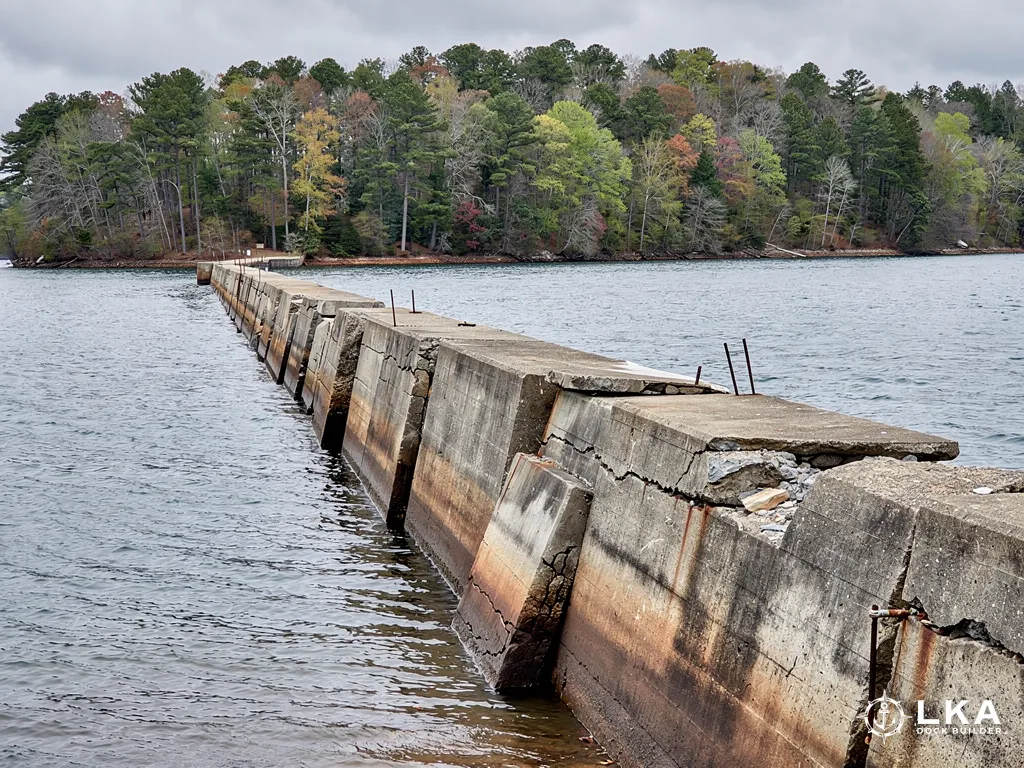
Signs of Seawall Deterioration and Repair
Seawall deterioration stems from water pressure, freeze-thaw cycles, and soil erosion behind the structure. Cracks, leaning sections, and joint leaks signal failure. Professional inspection, targeted crack repair, and complete replacement are the standard approaches when structural integrity is compromised, protecting Lake Anna properties from further land loss as part of broader shoreline stabilization efforts.
Key Takeaways
Hydrostatic pressure builds when saturated soil behind the wall cannot drain, forcing the structure to bow or collapse.
Wake erosion from boat traffic scours foundation soil, creating voids that cause leaning or uneven settling.
Freeze-thaw cycles widen concrete cracks, exposing rebar to moisture and triggering internal corrosion.
Visible rust stains, joint gaps, and landward sinkholes signal structural failure requiring professional inspection.
What causes seawall deterioration on freshwater lakes?
Seawall deterioration on freshwater lakes stems from four primary forces that compound over time. Hydrostatic pressure, wake erosion, joint decay, and freeze-thaw cycles work together to undermine even well-built structures. Property owners who ignore early warning signs face complete wall failure and costly shoreline loss.
Why does saturated soil behind a seawall cause structural failure?
Hydrostatic pressure seawall damage builds when water saturates the soil behind the wall and cannot drain properly. This trapped water exerts relentless force against the structure. When cracks appear or sections begin to lean, the root cause is often failing drainage and eroded soil rather than surface wear. Without adequate weep holes or drainage systems, pressure intensifies after heavy rains and seasonal water level changes. The wall eventually bows, cracks, or collapses outward.
How does boat traffic damage lakefront seawalls?
Wake erosion from boat traffic accelerates deterioration by undercutting the seawall’s base. Constant wave action scours soil from the foundation, creating voids beneath the structure. Helicon’s research confirms that pounding waves and shifting soil place even well-built seawalls under constant stress. On busy freshwater lakes like Lake Anna, repeated wake impacts strip away protective material faster than natural wave action alone. The wall loses foundational support and begins to lean or settle unevenly.
Signs of Seawall Deterioration emerge through several visible indicators. Gaps or separations between wall panels signal joint decay, which allows soil to escape from behind the structure. This soil loss creates cavities that further destabilize the wall. Visible rust stains point to internal rebar corrosion that worsens when freeze-thaw cycles crack the concrete and admit moisture and oxygen. Water seeps into tiny concrete cracks, freezes, expands, and widens those cracks with each cycle. The reinforcing steel inside corrodes once exposed to moisture and oxygen.
Proper drainage installation and durable construction methods address these deterioration mechanisms. Regular monitoring for key maintenance steps catches joint separation and rust staining before structural integrity fails.
What are the early signs of seawall deterioration?
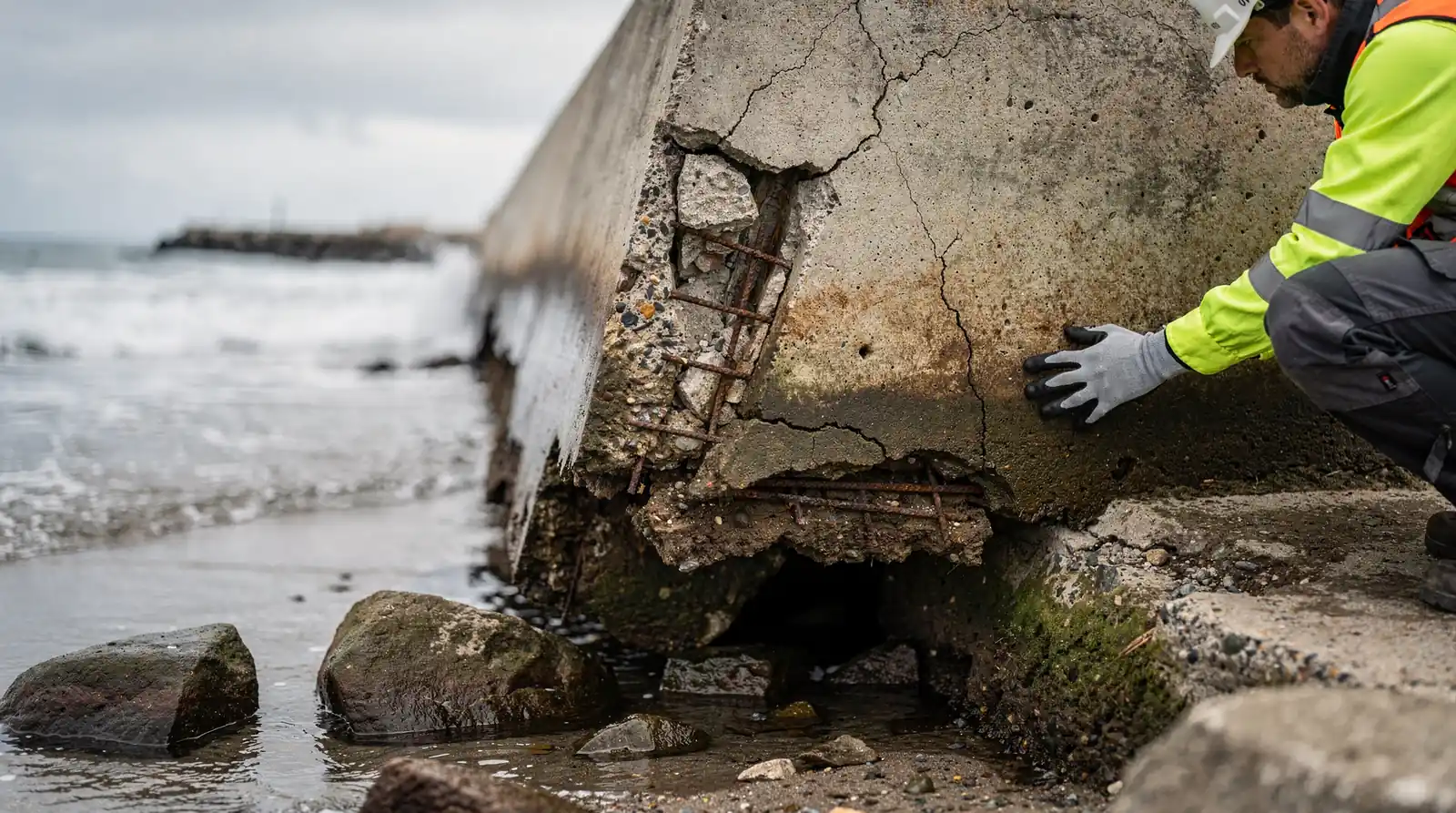
Early Signs of Seawall Deterioration appear as visible surface damage and subtle structural shifts. Cracks and chips in concrete mark the first warning that a seawall’s integrity is failing. Property owners who catch these indicators early avoid catastrophic collapse and costly shoreline loss.
What visible damage indicates a seawall is failing?
Surface-level damage provides the most obvious clues. Cracks and chips in the concrete develop from freeze-thaw cycles, wave impact, and soil pressure behind the wall. These openings allow water to penetrate deeper layers, accelerating internal decay. Rust stains on the wall surface suggest internal rebar corrosion, a serious structural concern that weakens the wall from within. Once rust blooms appear, the steel reinforcement is actively deteriorating.
How does the ground behind a seawall signal trouble?
Problems behind the wall are harder to spot but more dangerous. Soil erosion behind the seawall is a red flag that the wall is losing its support base. Sinkholes, depressions, or soft ground on the landward side mean soil is washing out through cracks or failed joints. Without stable soil retention and tieback anchoring, the wall carries unbalanced lateral loads it was never designed to handle.
Leaning or bulging sections of the wall signal that structural movement has already begun. A vertical seawall should stand straight. Any tilt, bow, or outward bulge means the soil support has failed and hydrostatic pressure is winning. At this stage, repair options narrow quickly. Catching these early indicators helps property owners make informed decisions before minor damage becomes a full seawall replacement.
How do I inspect my seawall for damage?
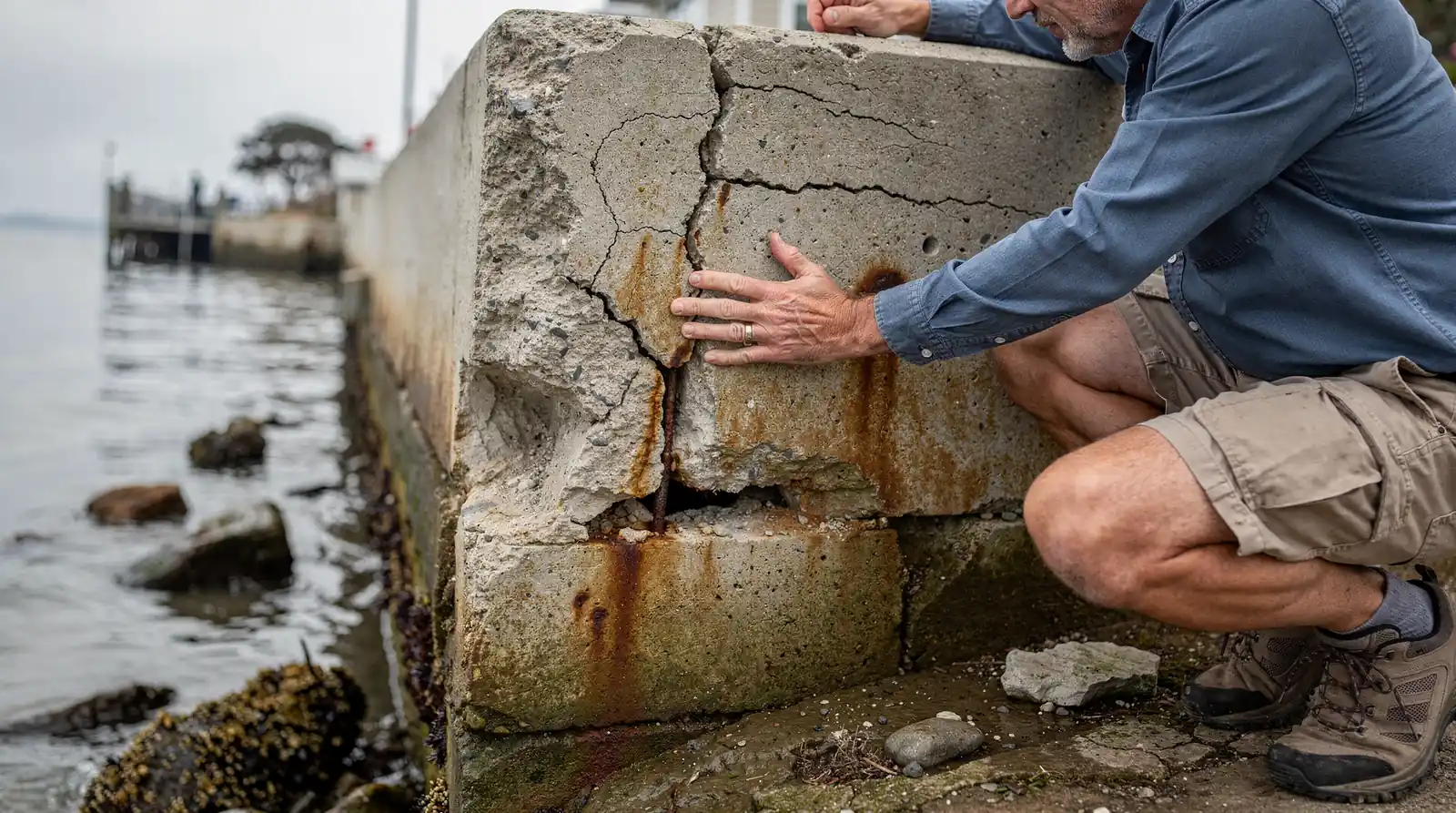
A thorough seawall inspection catches structural problems before repair costs spiral out of control. Skipping routine assessments risks losing shoreline stability and facing costly replacement bills. The inspection process combines a careful visual sweep with professional evaluation of what lies beneath the surface.
What are the visible signs of seawall deterioration?
Cracks and chips in the concrete surface demand immediate attention. Rust stains bleeding through the wall signal internal rebar corrosion, a problem that weakens the entire structure from within. Gaps or separations between wall panels indicate soil movement behind the seawall. Soil erosion on the landward side often appears as sunken areas or sinkholes near the wall line. Property owners can spot these warning signs during a walkthrough, but visual checks only reveal part of the story.
Can a homeowner perform a seawall inspection alone?
A property owner can look for surface-level red flags. However, only a trained professional fully assesses the structural integrity of a seawall. Professional evaluations assess shoreline soil stability and environmental impact. Professional teams examine what the naked eye misses: subsurface erosion patterns, anchor rod tension, and drainage performance behind the wall. Noticing any of the visible warning signs means it is time to call a qualified contractor for a comprehensive assessment.
When should I repair versus replace my seawall?
Seawall repair addresses minor damage without compromising structural integrity. Replacement becomes necessary when the wall’s foundation or alignment fails.
Deciding between seawall repair vs replacement starts with a clear boundary separating fixable issues from the seawall failure signs that point to catastrophic failure. Signs of Seawall Deterioration fall into two categories: surface distress and structural compromise. Repair works best for cracks, joint leaks, or isolated corrosion where the overall structure remains stable. Replacement is required when there is significant leaning, widespread material failure, or loss of soil support behind the wall. In most cases, structural movement is the tipping point.
What damage can a seawall repair actually fix?
Repair suits localized problems. Cracks, spalling concrete, leaking panel joints, and minor rust staining all qualify when the wall stands straight and the soil behind it stays in place. Advanced repair methods like soil stabilization and void filling extend the life of a failing wall without full replacement. These techniques reinforce the ground behind the structure and halt further movement before it accelerates.
How do I know if my seawall is too far gone?
Three conditions signal replacement. The wall leans visibly outward or inward, panels separate and expose the backfill, or soil settles dramatically behind the structure. Widespread material failure means multiple sections deteriorate simultaneously. Structural movement changes everything. Once the wall shifts, no surface patch restores the lost support, and the risk of sudden collapse during a storm increases sharply.
Factor | Repair | Replace ——-|——–|——— Wall alignment | Straight, no lean | Visible tilt or bowing Damage extent | Isolated cracks or leaks | Multiple failing sections Soil condition | Intact behind wall | Eroded or settled backfill Cost horizon | Short-term fix | Long-term structural solution
Property owners who delay replacement when the foundation has shifted face compounding repair bills. Acting before soil loss spreads keeps the shoreline stable and protects the upland investment.
What are the steps to fix a deteriorating seawall?
Learning how to repair a seawall begins with a thorough professional assessment. Signs of Seawall Deterioration like leaning panels, soil loss behind the wall, or visible cracks demand immediate evaluation. A full replacement restores structural integrity when damage extends beyond surface repairs.
How does site preparation work before a seawall replacement?
The shoreline area gets cleared of debris and obstructions. A wood drive guide is installed to establish the wall’s front alignment and elevation. This framework ensures the new seawall follows a precise, straight line along the waterfront.
What materials form the core structure of a new seawall?
Steel, vinyl, or composite sheets are driven deep into the soil. These sheets form the primary structure of the seawall. Interlocking sheets create a continuous barrier that resists water pressure and soil movement. The interlocking design prevents gaps where erosion could restart.
LKA Dock Builder uses premium materials and precision workmanship to ensure seawalls outlast standard construction. The company’s 3D design approval process lets property owners see the final layout before installation begins. Every project follows Lake Anna’s shoreline regulations while matching the client’s budget and property needs. A properly installed seawall, backed by ongoing lake seawall maintenance, stops land loss and preserves waterfront value for decades.
FAQ
What causes seawall deterioration on freshwater lakes?
Hydrostatic pressure, wake erosion, joint decay, and freeze-thaw cycles compound over time to undermine seawalls. These forces cause cracks, leaning sections, and joint leaks that signal structural failure.
How does boat traffic damage lakefront seawalls?
Wake erosion from boat traffic scours foundation soil, creating voids beneath the structure. This loss of foundational support causes the wall to lean or settle unevenly.
What are the visible signs of seawall deterioration?
Visible indicators include cracks, chips, gaps between wall panels, and rust stains. These signal joint decay and internal rebar corrosion, requiring professional inspection.
Conclusion
Understanding what causes seawall deterioration and recognizing the warning signs early puts the decision squarely in the property owner’s hands. Routine professional inspections catch surface distress before it becomes structural compromise, and acting on those findings preserves both the shoreline and the investment behind it. Whether the solution is targeted repair or full replacement, the path forward starts with a single step: scheduling a comprehensive assessment to secure the waterfront for decades to come.