
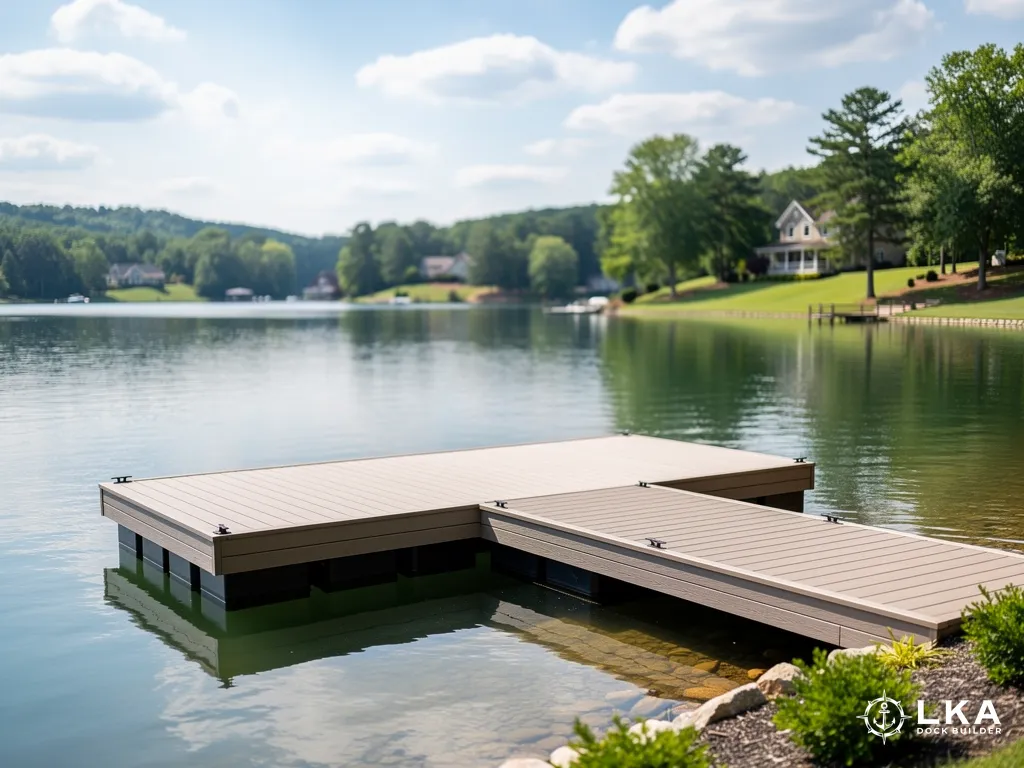
The Best Decking Materials for Custom Docks in Lake Anna
Trex composite decking and Wolf PVC decking are the top choices for Lake Anna docks. LKA Dock Builder installs both materials, ensuring long-lasting performance against the lake’s environmental conditions.
Key Takeaways
Trex composite and Wolf PVC decking are the top choices for Lake Anna docks.
Lake Anna’s 200-plus miles of shoreline create wildly different exposure conditions for dock decking.
Moisture intrusion leads to rot in organic materials, stressing fasteners and structural connections.
Composite and PVC options resist moisture and UV damage with far less upkeep than treated lumber, making them a popular choice for lakefront builds.
What Makes Lake Anna Tough on Dock Decking?
Lake Anna’s 200-plus miles of shoreline create wildly different exposure conditions for dock decking. A sheltered cove and a wind-whipped main-channel point demand entirely different material performance. Virginia’s mild climate extends the punishment. Outdoor space gets used most of the year, from cool fall mornings to hot July afternoons. That means decking faces UV degradation, temperature swings, and heavy foot traffic across all four seasons.
Water is the constant adversary. Unlike land-based decks, boat docks must withstand the relentless influence of water and the everyday wear and tear of boating, kayaking, fishing, and lounging. Moisture intrusion leads to rot in organic materials. Splashing, ice, and fluctuating water levels stress fasteners and structural connections. A material that performs beautifully on a backyard deck can fail within a few seasons at the waterline.
Which decking materials hold up best against Lake Anna’s conditions?
LKA Dock Builder builds custom docks at Lake Anna using treated lumber, AZEK and Trex decking, Wolf PVC decking, and aluminum and vinyl-coated steel for select structural and hardware components. Each material addresses a different balance of cost, maintenance, and durability. Each material addresses a different balance of cost, maintenance, and durability. Treated lumber offers an economical entry point but demands regular sealing. Composite and PVC options resist moisture and UV damage with far less upkeep. The company’s material selection guide walks through how these choices perform under real Lake Anna conditions.
How does sun exposure affect dock decking longevity?
Direct sunlight breaks down unprotected wood fibers and fades lower-grade composites. PVC decking and capped composites resist UV degradation more effectively. LKA Dock Builder helps homeowners weigh cost, durability, and maintenance for different decking materials based on how their property sits on the water. The right decking materials for custom docks prevent warping, splintering, and color loss even on the lake’s most exposed properties.
How Do We Compare Decking Materials for Custom Docks?
LKA Dock Builder evaluates decking materials for custom docks across three key criteria: upfront investment, long-term maintenance demands, and how each property sits on Lake Anna’s water. The right material choice depends on budget, maintenance preferences, and the specific shoreline conditions of every build site. A dock that fights its environment costs far more over time than one matched to it from day one.
LKA Dock Builder’s material comparison starts with a clear understanding of Lake Anna’s demands. Constant moisture exposure, UV radiation, and freeze-thaw cycles accelerate wear on every surface. Material selection directly determines how much time and money a property owner spends keeping a dock safe and functional through each season.
What Is the Cost Difference Between Wood and Composite Decking?
Wood costs less upfront but requires ongoing staining, sealing, and repair, especially in a lakefront environment with constant moisture exposure. Composite and PVC decking cost more initially but require significantly less long-term maintenance. Both resist rot, splintering, and fading far better than wood.
Material
Upfront Cost
Maintenance Demand
Lifespan Profile
Pressure-treated lumber
Lower
High (annual sealing, staining, splinter repair)
Shorter without diligent upkeep
Trex composite
Higher
Low (occasional cleaning)
Extended, resists rot and fading
AZEK™ PVC / Wolf™ PVC
Higher
Lowest (minimal cleaning)
Maximum, impervious to moisture absorption
LKA Dock Builder offers this range because no single material fits every Lake Anna shoreline. A deeply shaded cove property faces different moisture challenges than an exposed point with full southern sun. The company’s full lakefront decking materials comparison walks through each scenario in detail.
Is Trex the Same as Composite Decking?
Trex is a composite decking brand made from a blend of recycled wood fibers and plastic rather than solid wood. It represents one established option within the composite category, and LKA Dock Builder offers it alongside alternative composite and PVC materials.
LKA Dock Builder uses aluminum and vinyl-coated steel for select structural and hardware components. The decking surface gets most of the attention, but fastener and frame material choices determine whether a dock stays rigid through years of wave action and seasonal temperature swings. LKA Dock Builder matches every layer of the material specification to the specific conditions of each Lake Anna build site.
PVC vs Composite Dock Decking: Which Is Better for Lake Anna?
The better choice depends on a homeowner’s priorities. Composite decking delivers a natural wood look with low maintenance, while PVC decking offers maximum moisture resistance for Lake Anna’s fluctuating water levels.
LKA Dock Builder installs both material types across the Lake Anna region, offering decking materials for custom docks from Trex composite and AZEK PVC, along with Wolf PVC decking for select projects. Each material solves different problems on the water.
How do composite and PVC decking compare for Lake Anna docks?
Composite boards blend recycled wood fibers with plastic. This construction resists rot and splintering far better than traditional lumber. Trex composite decking, offered by LKA Dock Builder across four product lines, spans a range of price and performance tiers. The Enhance Basics line provides an entry-level composite option. Transcend sits at the top with a thicker shell and richer color retention.
PVC decking contains no organic material at all. AZEK dock decking and Wolf PVC decking, both used by LKA Dock Builder on dock and boathouse projects, absorb virtually no water. This characteristic prevents swelling, warping, and algae staining in areas that stay wet for long periods.
Feature
Composite (Trex)
PVC (AZEK / Wolf)
Moisture resistance
High
Maximum
Wood-like appearance
Yes
Mimics wood grain
Heat retention
Moderate
Higher in direct sun
Price range
Tiered (Enhance to Transcend)
Premium
Best for
Natural look, balanced budget
Constant water contact, minimal upkeep
Which material holds up better against Lake Anna’s conditions?
Lake Anna’s 200-plus miles of shoreline create varied exposure. Docks in shallow coves face different stresses than those on open water. Composite decking performs well on most sites. PVC decking excels where wave splash or seasonal flooding keeps boards damp for days. LKA Dock Builder evaluates each property’s orientation and water depth before recommending a material. The goal is a deck surface that stays safe, cool underfoot, and structurally sound for decades.
What About Treated Wood for a Dock?
Treated lumber remains a foundational material for custom docks at Lake Anna. LKA Dock Builder uses treated wood as one of several decking materials for custom docks, selecting it when upfront budget and a traditional appearance are the top priorities.
Is Pressure Treated Dock Decking the Most Affordable Option?
Treated wood costs less upfront than composite or PVC alternatives. A basic dock installation in Lake Anna varies in cost, and choosing treated lumber keeps the project at the lower end of that spectrum. Premium decking materials push the price higher.
The savings come with a trade-off. Wood requires ongoing staining, sealing, and repair in a lakefront environment with constant moisture exposure. Skipping that maintenance accelerates deterioration and shortens the dock’s service life.
How Does Wood Compare to Composite and PVC Over Time?
Composite and PVC decking resist rot, splintering, and fading far better than wood, which is why many Lake Anna homeowners choose them for long-term value. Homeowners who choose treated lumber accept a recurring maintenance schedule that composite and PVC owners avoid. LKA Dock Builder also offers composite boat dock decking for clients who prefer a lower-maintenance path.
The table below summarizes the key differences between treated wood and synthetic options for Lake Anna docks.
Material
Upfront Cost
Maintenance Requirement
Rot & Splinter Resistance
Treated Wood
Lower
High (annual staining, sealing)
Moderate
Composite/PVC
Higher
Low
High
Treated wood delivers a classic look at an accessible price. The long-term cost of ownership climbs with every season of required upkeep.
Which Decking Material Should You Choose?
The right decking materials for custom docks at Lake Anna depend on budget, maintenance tolerance, and shoreline exposure. LKA Dock Builder combines 3D design approval, shoreline regulation expertise, and premium materials like AZEK and Trex to deliver durable, lake-friendly docks. No single material works for every property. The choice balances upfront cost against decades of performance.
Composite decking blends recycled wood fibers and plastic. Trex composite resists rot and splintering while staying cooler underfoot than solid PVC on hot Virginia afternoons. AZEK PVC decking sheds water completely and never absorbs moisture. Both materials eliminate annual sealing and staining. LKA Dock Builder offers both options, matching the material to each homeowner’s sun exposure and dock configuration.
What makes treated lumber a practical choice?
Pressure-treated lumber costs less upfront than composite or PVC. It handles structural loads well and accepts fasteners predictably. The tradeoff is maintenance. Treated wood needs periodic sealing to resist Lake Anna’s humidity and seasonal water-level changes. For clients prioritizing initial budget, treated lumber remains a sound structural choice when paired with premium decking on walking surfaces.
Material
Upfront Cost
Maintenance
Best For
AZEK PVC
Higher
Minimal
High moisture exposure, zero absorption
Trex Composite
Moderate
Low
Balanced performance, cooler surface
Treated Lumber
Lower
Regular sealing
Budget-conscious structural builds
Hands-on founders with 37 years of combined experience ensure precision workmanship, from laser-straight finishes to meticulous detailing. LKA Dock Builder is licensed and insured, serving Bumpass, Mineral, Spotsylvania, and Orange counties. For an accurate estimate, consulting directly with a local dock builder who can assess the property and discuss goals is the most reliable path. A custom dock design consultation clarifies which material suits a specific shoreline and usage pattern.
FAQ
What are the best dock decking materials for Lake Anna?
Trex composite decking and Wolf PVC decking are top choices for Lake Anna docks, with LKA Dock Builder installing both for lasting performance.
How does Lake Anna’s environment affect dock decking?
Lake Anna’s 200-plus miles of shoreline create wildly different exposure conditions. Which decking materials does LKA Dock Builder install? LKA Dock Builder installs Trex composite decking, Wolf PVC decking, and AZEK PVC decking. They also use treated lumber, aluminum, and vinyl-coated steel for select components.
Conclusion
Choosing the right decking material comes down to balancing upfront cost against long-term maintenance and the specific conditions of your shoreline. Homeowners who prioritize minimal upkeep and maximum moisture resistance select PVC, while those wanting a natural look with moderate pricing choose composite. Budget-conscious builds still perform well with treated lumber when paired with premium walking surfaces. The final decision rests on your property’s exposure and your tolerance for seasonal upkeep, so a site assessment with a licensed local builder provides the clearest path forward.