What Are the Common Issues Property Owners Face With Existing Docks at Lake Anna?
If you already own a dock at Lake Anna, you’re likely dealing with more than one of the common existing dock issues that come with years on the water: rot, piling wear, permitting questions, or the effects of Lake Anna’s shifting water levels. LKA Dock Builder helps waterfront homeowners across Mineral, Bumpass, Louisa, Spotsylvania, and Orange County assess and repair these problems before they get worse. This guide covers the regulatory, structural, and environmental factors that most often affect existing docks at Lake Anna, plus what to know if you’re buying or selling a waterfront property.
Key Takeaways
- Existing docks at Lake Anna face a mix of regulatory, structural, and environmental challenges, not just simple wear and tear.
- Dominion Energy’s shoreline construction guidelines and county permits, which vary between Louisa, Spotsylvania, and Orange, both play a role in what repairs and modifications are allowed.
- Rot, piling failure, and decking wear are the most common structural issues on older docks.
- Lake Anna’s water level fluctuations and wave action contribute significantly to long-term dock deterioration.
- A free 911 dock sign through Louisa County and the Lake Anna Civic Association can help emergency responders find your dock faster.
- Dock condition can directly affect property value when buying or selling a Lake Anna waterfront home.
What Are the Key Regulatory Challenges for Existing Docks at Lake Anna?
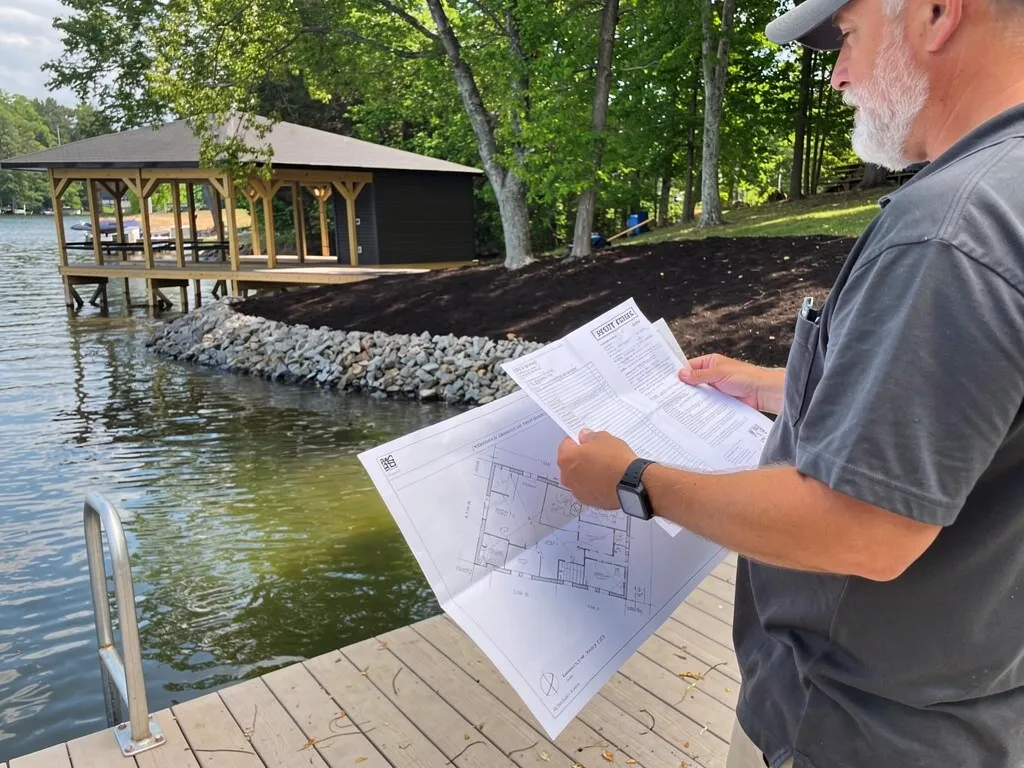
Existing dock owners at Lake Anna generally navigate three layers of regulation: Dominion Energy’s shoreline construction guidelines, county-level permitting, which differs between Louisa, Spotsylvania, and Orange counties, and, in many communities, HOA or POA rules on top of that.
How Does Dominion Energy’s Shoreline Easement Affect Dock Repairs and Modifications?
Dominion Energy owns and manages significant shoreline property around Lake Anna in connection with the North Anna Power Station, and local ordinances point directly to Dominion’s own General Guidelines for Construction and Use Agreement for shoreline structures along that property. In practice, that means some dock repairs and modifications may require Dominion’s advance approval in addition to any county permit, particularly for work on or near Dominion-owned shoreline. If you’re not sure whether your property falls under this agreement, your county’s permitting office or LKA Dock Builder can help you figure that out before starting repair work.
What Are the County Permit Requirements for Dock Repairs in Louisa, Spotsylvania, and Orange?
Lake Anna dock permits differ by county. In Louisa County, dock and lake structure work requires a complete application packet, including a property plat and site-specific building plans, plus a separate Shoreline Packet for Lake Anna properties. In Spotsylvania County, docks and seawalls are treated as water-dependent structures allowed within the Resource Protection Area, but they require an approved site plan and Water Quality Impact Assessment, along with any additional federal, state, or local permits depending on the project’s size and location. Orange County has its own permitting process as well, though specific dock requirements are best confirmed directly with the county’s planning and zoning office. LKA Dock Builder helps clients navigate whichever county’s process applies to their property.
How Do HOA and POA Rules Influence Existing Dock Maintenance at Lake Anna?
Many Lake Anna communities have their own homeowners’ or property owners’ associations with additional rules on dock appearance, materials, or maintenance, on top of county and Dominion requirements. LKA Dock Builder’s design and permitting process includes confirming compliance with local regulations and HOA guidelines where they apply, so it’s worth having your HOA or POA’s specific rules on hand before starting a repair or renovation.
What Are the Most Common Structural and Material Issues Affecting Existing Lake Anna Docks?
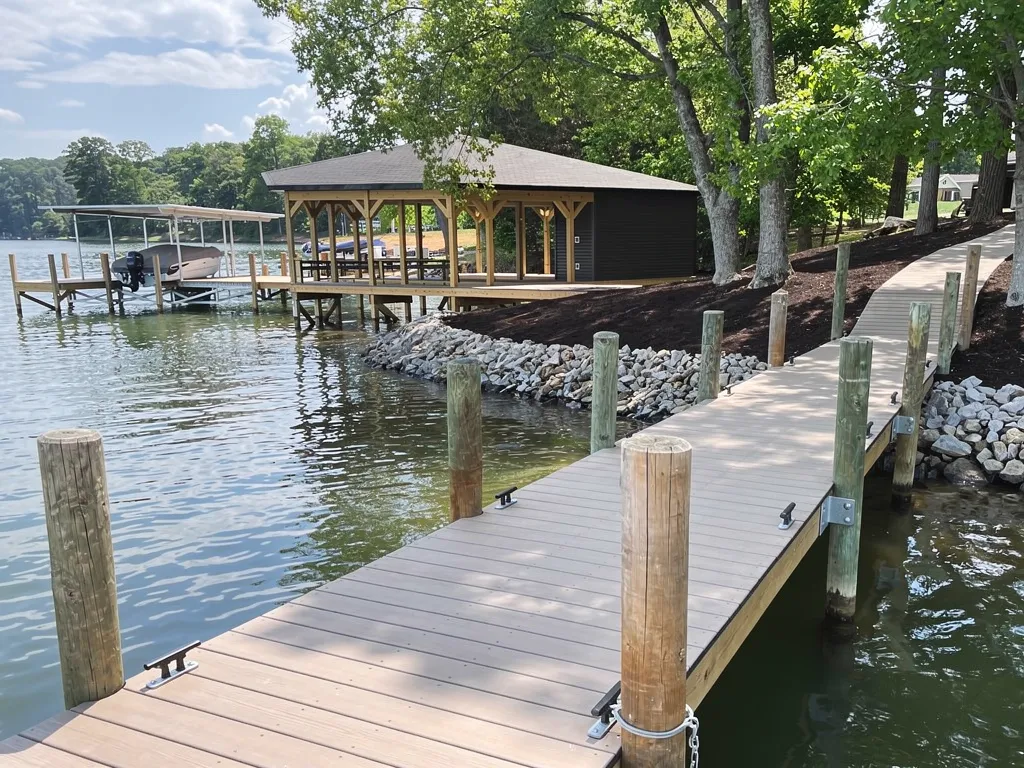
The most common issues on older Lake Anna docks fall into a few categories: wood rot, failing or shifting pilings, worn or damaged decking, and corrosion or looseness in hardware.
What Causes Dock Rot and How Can Property Owners Identify It Early?
Dock rot typically comes from prolonged moisture exposure, especially in wood that wasn’t properly treated or has lost its protective coating over time, and it’s one of the most frequent reasons Lake Anna homeowners look into dock rot repair. Early signs include soft or spongy spots in the decking, discoloration, a musty smell, or visible splitting near the waterline. Catching rot early, before it spreads to structural framing, usually means a smaller, less expensive repair.
How Do Pilings and Supports Fail and What Are the Warning Signs?
Pilings can fail from rot, corrosion, impact damage, or shifting in the lakebed over time, especially as water levels rise and fall throughout the year — a common reason property owners seek dock piling repair. Warning signs include a dock that feels less stable than it used to, visible leaning or gaps where a piling meets the decking, or sections of the dock that move independently of each other.
What Surface and Decking Problems Are Common on Existing Docks?
Different decking materials show wear differently. Pressure-treated wood, while affordable and resistant to rot and insects when new, can splinter, gray, or need resealing over time. Composite decking generally holds up better against fading, staining, and warping, though it can still show wear after many years. Aluminum decking resists corrosion and needs minimal maintenance but can dent, while vinyl-coated steel offers durability but can show wear at seams or connection points. Knowing which material your existing dock uses helps determine the right repair approach.
How Does Wave Action and Shoreline Erosion Damage Lake Anna Docks?
Constant wave action, from wind, boat traffic, and water level changes, can gradually erode the shoreline around a dock’s anchor points and stress the connections between a dock and the shore. Over time, that erosion can undermine pilings or shift how a dock sits relative to the water, which is part of why proper piling depth and placement matter so much at the outset.
How Can Property Owners Effectively Repair and Maintain Their Existing Docks at Lake Anna?
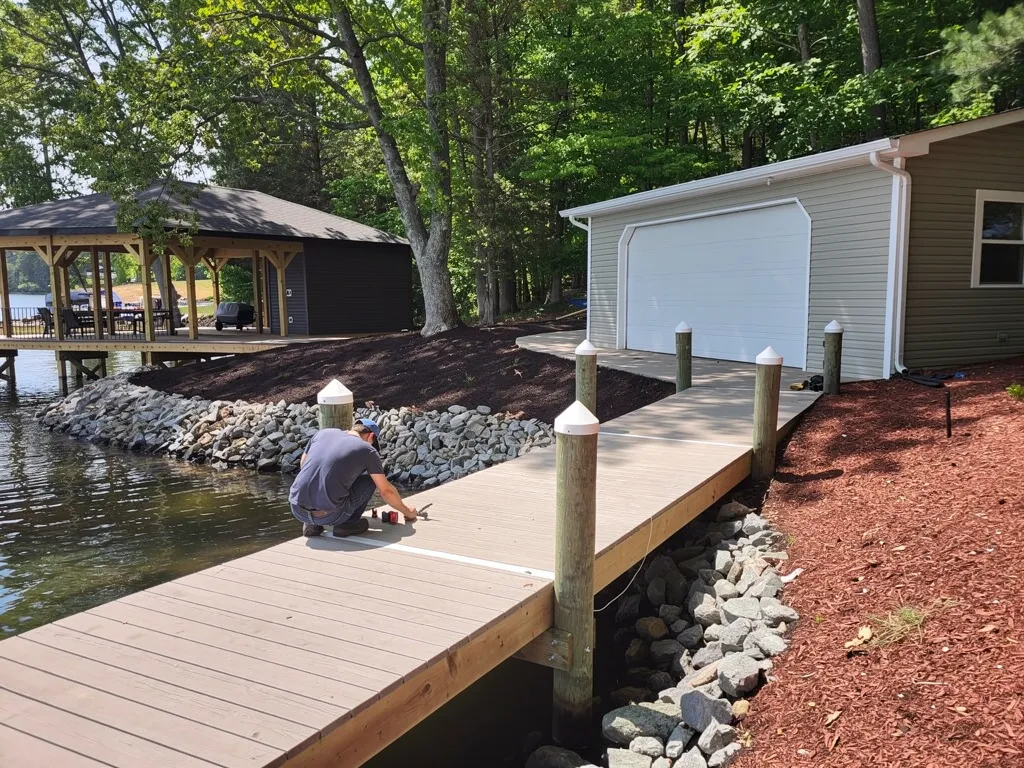
Effective dock repair starts with an accurate assessment of what’s actually wrong, followed by targeted repairs using materials suited to Lake Anna’s conditions, and ongoing maintenance to prevent the same issues from recurring.
When Should You Repair vs. Replace Your Existing Dock?
A repair usually makes sense when the damage is limited to specific components, like a section of decking or a single piling, and the rest of the structure is sound. A full replacement becomes the more practical option when rot or structural failure has spread through multiple areas, or when the cost of repeated repairs starts to approach what a new dock would cost. A professional assessment is the most reliable way to tell which situation you’re in.
What Are Best Practices for Preventative Dock Maintenance to Extend Longevity?
- Inspect decking regularly for soft spots, cracking, or loose fasteners
- Check pilings and structural supports for shifting, rot, or wear at the waterline
- Examine hardware like cleats, ladders, railings, and boat lift components for corrosion or looseness
- Address small issues promptly, since minor repairs are almost always less expensive than the larger rebuild that follows if damage is left unaddressed
Why Is Professional Assessment Important for Dock Repairs at Lake Anna?
An experienced eye can often catch problems that aren’t obvious to a homeowner, like early-stage rot hidden under decking or a piling that’s shifted just enough to matter. LKA Dock Builder’s repair process starts with an on-site inspection to identify the actual cause of an issue, not just its symptoms, before recommending a repair plan.
How Do 911 Location Markers Enhance Emergency Safety for Lake Anna Dock Owners?
Separate from any repair or construction project, Lake Anna dock owners can apply for a 911 dock sign through Louisa County and the Lake Anna Civic Association. The program, launched in 2012, has put more than 500 yellow signs on docks and common areas around the lake, each with a code that identifies the county (Louisa, Orange, or Spotsylvania), position relative to the Route 208 Bridge, and a unique number tied to the property’s actual 911 address. In an emergency, boaters can read that code to 911 dispatchers to help responders find the exact location faster, since standard street addresses don’t work on the water. It’s a straightforward, low-cost way to add a layer of safety to an existing dock.
What Are the Environmental and Usage Factors That Exacerbate Dock Issues at Lake Anna?
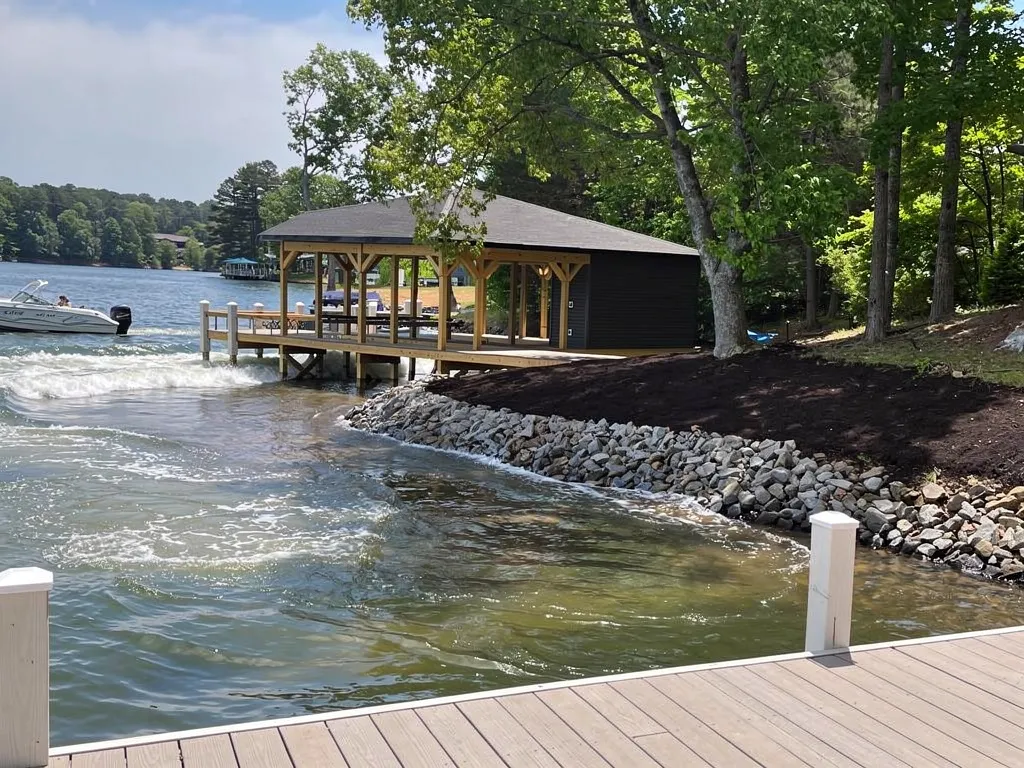
Beyond normal age and wear, two factors show up again and again on Lake Anna docks: boat traffic and wake, and the lake’s own water level fluctuations.
How Does Increased Boat Traffic and Wake Surfing Impact Dock Stability?
More boat traffic and wake naturally means more repeated stress on a dock’s structure and the shoreline around it over time. Virginia doesn’t have a single statewide law governing wake surfing, and specific rules can vary by lake, so it’s worth checking current local guidance before assuming what’s allowed near your property. Regardless of the specific rules in place, docks positioned in higher-traffic areas or narrower channels tend to see more wear from wake action than those in calmer coves.
What Role Do Lake Anna’s Water Level Fluctuations Play in Dock Deterioration?
Lake Anna’s full pond level is 250 feet above sea level, but the lake doesn’t always sit at that mark. During dry summer stretches, evaporation and reduced dam releases can pull the level down by roughly an inch a day, and it’s not unusual for the lake to run a couple of feet below normal by late summer before fall and winter rain bring it back up. That repeated cycle of exposure and submersion is one of the more significant, ongoing stressors on pilings and floating dock sections at Lake Anna specifically, compared to a more stable body of water.
How Do Existing Dock Issues Affect Buying or Selling Lake Anna Waterfront Properties?
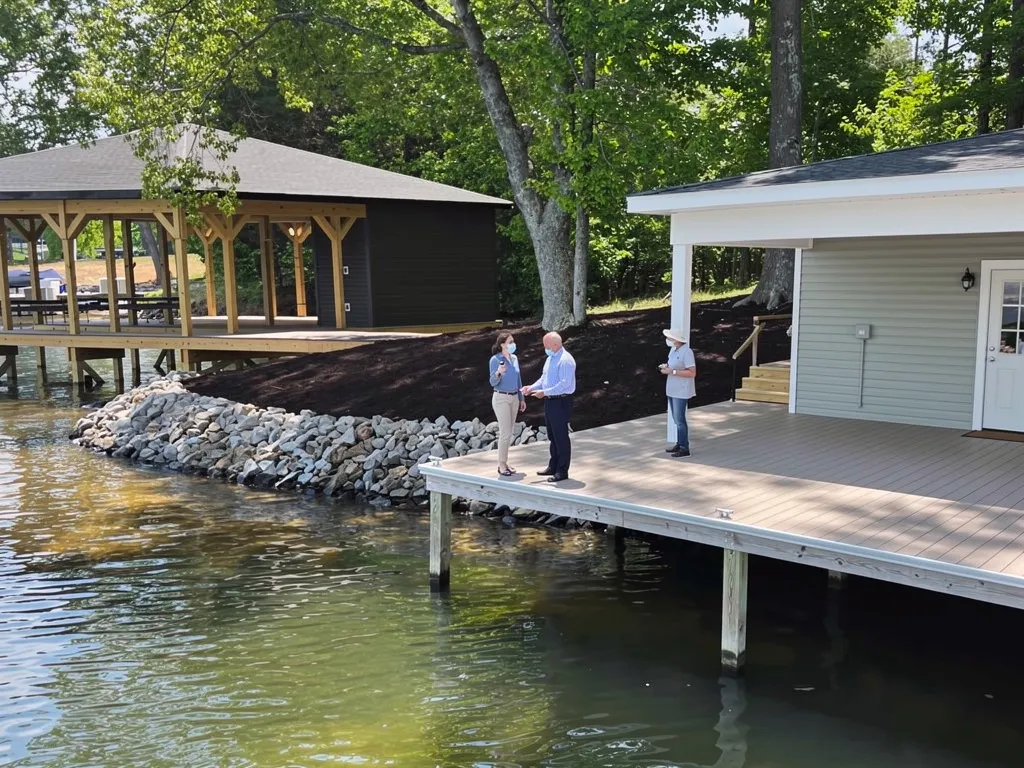
An existing dock’s condition, and whether it’s properly permitted, can factor directly into a Lake Anna property sale, for both buyers evaluating a purchase and sellers preparing to list.
What Should Buyers Know About Existing Dock Shoreline Agreements and Permits?
Before buying a Lake Anna waterfront property, it’s worth confirming that any existing dock was permitted correctly and, if it sits on or near Dominion Energy’s shoreline property, that it complies with Dominion’s construction and use guidelines. An unpermitted or non-compliant dock can become the new owner’s problem to resolve, so this is worth checking during due diligence rather than after closing.
How Do Existing Dock Conditions Influence Property Value and Sale Negotiations?
A dock in good repair is generally seen as an asset that supports a waterfront property’s value, while visible damage, like rotting decking or leaning pilings, can become a point of negotiation or a reason a buyer asks for a credit or repair before closing. Getting a professional assessment before listing a property can help sellers understand what, if anything, is worth addressing ahead of time.
Frequently Asked Questions
How Do I Know if My Dock’s Problem Is a Simple Repair or a Bigger Issue?
A professional assessment is the most reliable way to know for sure, but as a general rule, damage limited to a single section, like one deck board or one piling, is more likely a straightforward repair. Widespread rot, multiple failing pilings, or a dock that feels unstable in more than one spot usually points to a bigger underlying issue.
Do I Need a New Permit to Repair My Existing Dock?
It depends on the scope of the work and your county. Minor repairs to an existing structure often don’t require a new permit, while larger rebuilds or any change to the dock’s footprint typically do. LKA Dock Builder can help determine what applies to your specific project.
How Do I Get a 911 Dock Sign for My Property?
911 dock signs are available through Louisa County and the Lake Anna Civic Association, not through LKA Dock Builder directly. Property owners can apply online or by mail, and processing typically takes up to a month since each sign is tied to a GPS-verified location.
Rotting boards, a wobbly piling, or a dock that just doesn’t feel as solid as it used to shouldn’t be something you live with season after season. LKA Dock Builder helps homeowners across Mineral, Bumpass, Louisa, Spotsylvania, and Orange County get their existing docks properly assessed and repaired, so you can stop worrying and start using it again.