
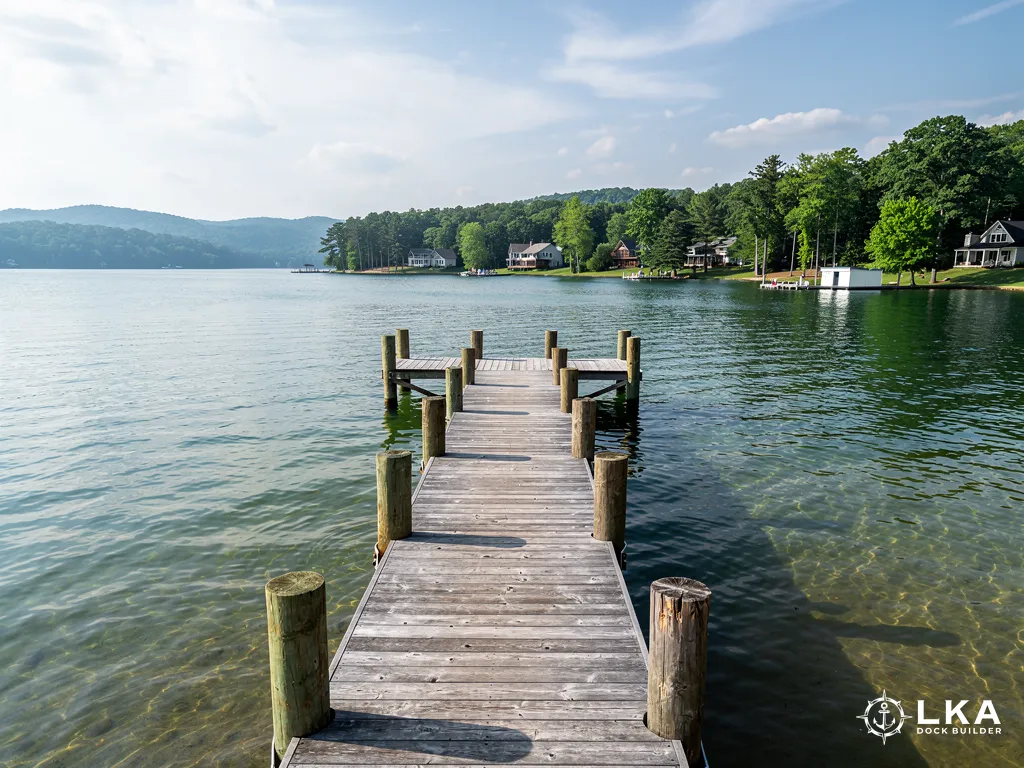
What Are the Key Factors That Affect the Cost of Building a Dock in Lake Anna
Dock construction costs at Lake Anna range from $20,000 to $50,000 or more for a basic installation. Final pricing depends on dock size, materials, complexity, and features. Custom add-ons, specialized boat lifts, premium decking, or floating designs raise the price. LKA Dock Builder, a trusted marine construction company in Lake Anna, VA, provides accurate estimates after assessing each property.
Key Takeaways
Basic dock installations at Lake Anna range from $20,000 to $50,000 or more.
Larger docks require more pilings, decking, and labor hours, raising total costs.
Pressure-treated pine offers an economical entry point versus premium composite decking.
Rocky substrates slow piling installation, increasing labor hours and overall expenses.
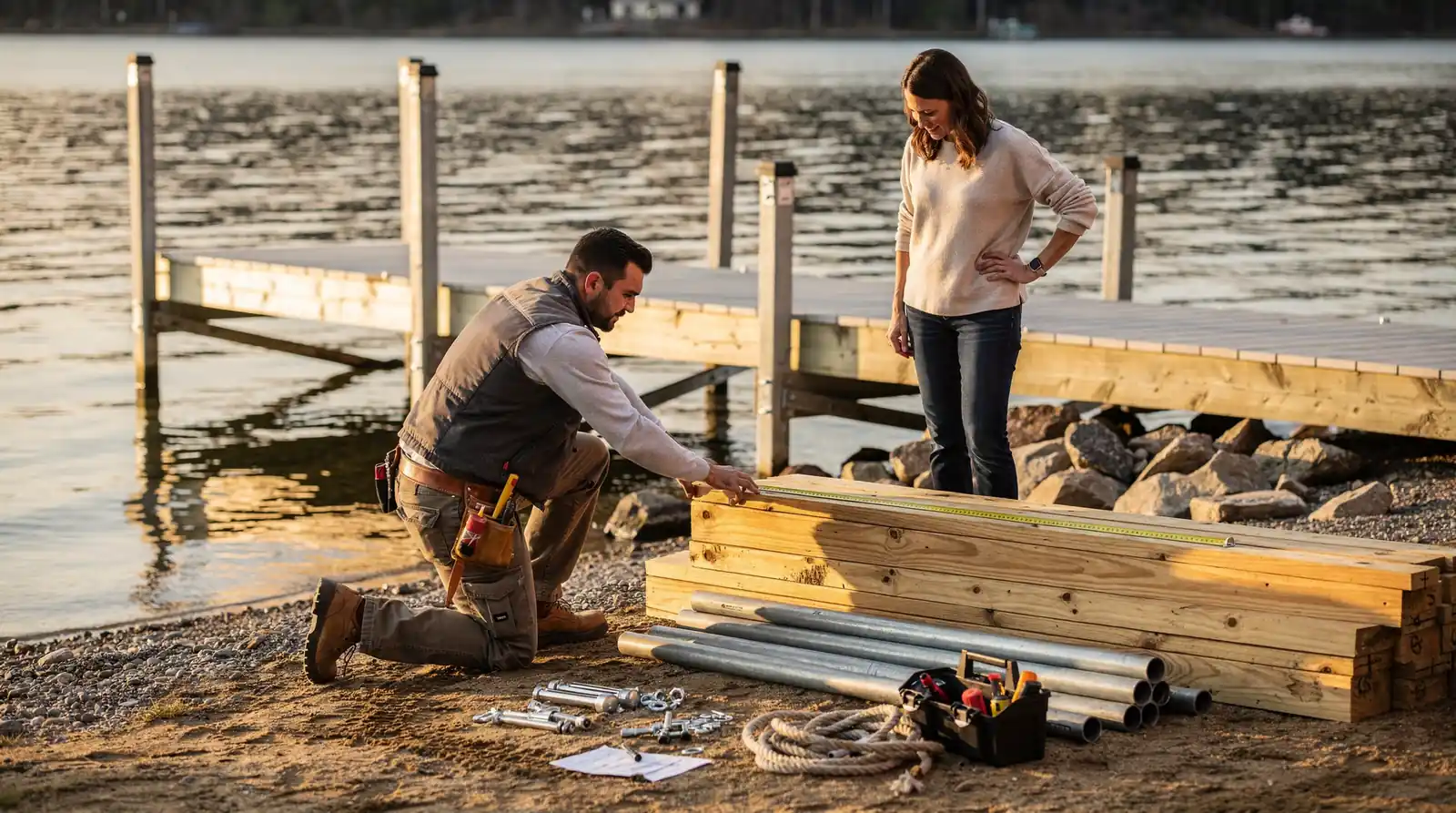
What Are the Key Factors That Affect the Cost of Building a Dock?
Dock construction costs at Lake Anna shift dramatically based on size, materials, complexity, and features. A basic installation typically ranges from $20,000 to $50,000 or more, according to LKA Dock Builder’s project data. Without a clear understanding of these variables, property owners risk budget overruns that delay projects and strain finances.
What Drives the Base Price of a Lake Anna Dock?
The starting point for any dock project hinges on its physical footprint and structural demands. Larger docks require more pilings, decking, and labor hours. Material selection creates another major cost divide. Pressure-treated pine offers an economical entry point. Composite decking and premium hardwoods push the price higher but deliver greater longevity against Lake Anna’s water conditions. A fixed pier design also costs differently than a floating dock system, which must ride changing water levels throughout the year.
How Do Custom Features and Add-Ons Change the Total?
Custom add-ons transform a simple platform into a full waterfront amenity, and each addition carries its own price tag. Specialized boat lifts represent a significant investment. Premium decking materials, integrated lighting, and storage lockers all increase the final figure. Floating dock designs, which adapt to fluctuating water depths, also raise the overall cost. LKA Dock Builder’s Lake Anna dock building cost insights detail how these choices compound. Property owners who skip detailed planning often face change orders that inflate budgets mid-construction.
Why Does Site Assessment Matter for Accurate Pricing?
Every Lake Anna shoreline presents unique challenges that no generic quote captures. Soil composition, water depth, and exposure to wind and wake all influence engineering requirements. A site with rocky substrate demands different equipment and labor than a soft-bottom location. For an accurate estimate, property owners should consult directly with a local dock builder who can assess the specific site and discuss functional goals. This evaluation prevents the costly mistake of under-building for real-world conditions.
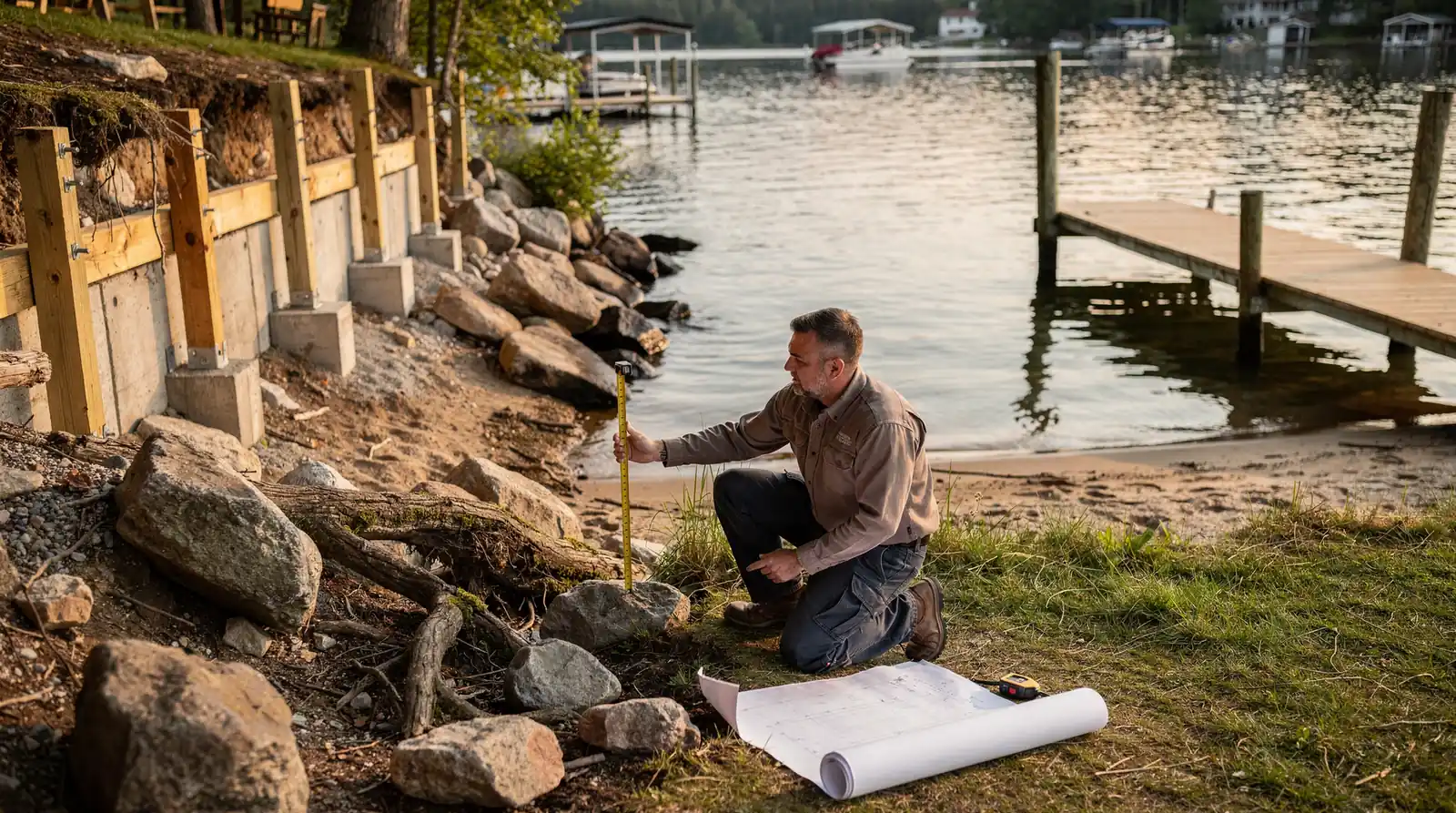
How Does Shoreline Condition Impact Your Dock Budget?
Shoreline conditions at Lake Anna directly determine dock construction costs. Water depth, soil composition, and bank slope shape every material choice and installation method.
A steep, rocky shoreline demands different engineering than a gradual, sandy bank. Deep water near the shore allows for fixed docks with shorter access ramps. Shallow, gradually sloping shorelines often require longer walkways or floating dock sections to reach navigable depths. These structural differences add material and labor expenses quickly. Soil type introduces another cost variable. Soft, silty lakebed soils need deeper pilings or specialized anchoring systems to ensure stability. Rocky substrates slow excavation and piling installation, increasing labor hours. Each site presents a unique combination of these factors.
What Dock Types Work Best for Different Lake Anna Shorelines?
The right dock type depends on shoreline profile and water depth. Fixed docks suit shorelines with moderate slopes and stable soil. Floating docks adapt well to fluctuating water levels and deeper, softer bottoms. Aluminum frames resist corrosion in wet environments. Wooden docks offer a traditional appearance but require more maintenance over time. Modular systems provide flexibility for irregular shorelines. A professional assessment matches the structure to the specific site conditions.
How Do Local Regulations Affect Shoreline Construction Costs?
Permitting requirements at Lake Anna add another layer to shoreline projects. Setback rules, environmental protections, and navigation clearances influence dock dimensions and placement. A design that complies with all regulations from the start avoids costly revisions. Experienced builders navigate these rules efficiently. Lake Anna Marine Construction brings over 25 years of experience to shoreline assessments. The company builds fixed docks, floating docks, aluminum docks, wooden docks, and modular systems tailored to each property’s conditions. A detailed custom waterfront structure quote accounts for every shoreline variable before construction begins.
What Role Does Lake Anna Dock Permitting Play in Construction Costs?
Permits directly influence the total cost of building a dock at Lake Anna. The types of permits required, the application process, and environmental mandates all add line items to a project budget. Without proper permitting, property owners face fines, forced removal, and project delays that inflate expenses further.
What Types of Permits Are Needed for Dock Construction at Lake Anna?
Understanding the specific permits required is essential for accurate budgeting. Lake Anna dock projects typically need approvals from multiple agencies. These permits address shoreline use, environmental protection, and structural safety. Each permit carries its own fee and documentation requirement. Failing to identify all necessary permits early leads to unexpected costs and stalled timelines.
How Does the Permit Application Process Affect Project Timelines and Costs?
The application process involves specific steps that directly impact overall project expenses. Submitting incomplete documentation triggers review delays. Each week of delay extends equipment holding costs and labor scheduling gaps. A smooth application keeps the project on schedule. A rejected or revised application adds administrative hours and pushes construction into less favorable weather windows, which can increase material and labor rates.
What Environmental Considerations Influence Permitting Costs?
Environmental considerations at Lake Anna must be addressed during the permitting phase. Regulations protect water quality, fish habitats, and shoreline stability. Compliance may require specific construction methods or materials that cost more than standard alternatives. Mitigation measures, such as erosion control plans, add to the upfront investment. These requirements are non-negotiable and must be factored into the total project cost from the start.
Property owners should prepare for costs associated with dock permitting, which vary based on project scope. A small fixed pier incurs lower fees than a large boathouse with a boat lift. For a detailed breakdown of how materials and regulations shape a project, review dock construction services that cover Lake Anna’s specific requirements. Budgeting for permits as a distinct line item prevents financial surprises midway through construction.
How Do Decking Materials Affect Your Dock Investment?
Decking material selection directly shapes both upfront costs and long-term ownership expenses for a Lake Anna dock. The choice between pressure-treated wood and premium composites determines how much maintenance a structure demands and how long it resists the lake’s punishing sun, water, and seasonal ice.
A dock represents a significant fixed asset, and the walking surface bears the brunt of daily wear. Material decisions affect not just the initial invoice but also the frequency of repairs, the labor hours needed for upkeep, and the structure’s aesthetic longevity.
What Makes Composite Decking Different From Wood?
Composite boards blend recycled wood fibers with plastic, creating a material that resists rot and splintering without the need for staining or sealing. This built-in resistance eliminates the annual maintenance cycle that pressure-treated lumber demands. Over a typical 15-to-20-year ownership period, the reduced upkeep costs for composites partially offset their higher purchase price.
LKA Dock Builder sources Trex decking across four distinct product lines: Enhance Basics, Enhance Naturals, Select, and Transcend. Each tier delivers a different balance of price, colorfastness, and surface texture. The entry-level lines suit budget-conscious projects, while the top-tier Transcend line provides the deepest wood-grain patterns and highest fade resistance for docks receiving intense southern exposure on Lake Anna’s main basins.
How Do Premium PVC Options Compare?
For waterfronts with extreme sun exposure or heavy foot traffic, AZEK PVC decking offers another material path. Unlike composites that contain organic wood flour, AZEK is entirely synthetic. This composition provides unmatched resistance to moisture absorption, a critical advantage on floating dock sections that sit constantly above the waterline. LKA Dock Builder pairs premium decking materials like AZEK and Trex with marine-grade fasteners to combat the corrosive effects of Lake Anna’s mineral-rich water.
Understanding composite decking dock cost against traditional wood helps property owners set realistic budgets from the start. The following table summarizes the key trade-offs:
Material Type
Upfront Cost
Maintenance Demand
Longevity on Lake Anna
Pressure-Treated Wood
Lower
Requires annual staining/sealing
10–15 years before major component replacement
Trex Composite (Enhance/Select lines)
Moderate
Periodic washing only
20+ years; resists rot and splintering
Trex Transcend / AZEK PVC
Higher
Minimal; highest fade and moisture resistance
25+ years with minimal degradation
Property owners who skip the material analysis often face premature deck board replacement within a decade. Investing in a composite or PVC surface from the start locks in a lower-maintenance asset that preserves both safety and curb appeal across Lake Anna’s demanding four-season cycles.
What Add-Ons and Features Drive Up Dock Costs?
Custom add-ons and specialized features transform a basic dock into a premium waterfront asset. These enhancements also represent the largest variable in any Lake Anna construction budget. A standard installation provides essential access, but the final price climbs quickly when owners select upgraded materials, mechanical systems, and expanded structural footprints.
What role do boat lifts play in total project cost?
Boat lifts rank among the most significant single add-ons for Lake Anna properties. Specialized lifts protect watercraft from wave damage and simplify launching. The equipment itself, plus the reinforced framing required to support it, pushes total costs well beyond a bare-dock figure. Owners who skip a lift at construction often face a more expensive retrofit later.
How does decking material affect the budget?
Premium decking materials drive costs higher than standard treated lumber. Composite and exotic hardwood options resist UV exposure and moisture better over time. The upfront material premium delivers lower maintenance expense across the structure’s lifespan. For Lake Anna’s fluctuating water levels, durable surfaces prevent the warping and splintering that cheaper boards develop within a few seasons.
Are floating docks more expensive than fixed docks?
Floating dock designs often carry a higher price tag than fixed alternatives. The engineering demands differ: floating systems require encapsulated flotation, flexible anchoring, and gangway connections that fixed docks avoid. These components add material and labor costs. However, floating docks adapt to Lake Anna’s water-level changes without manual adjustment, a functional advantage many owners find worth the investment.
Beyond individual features, the scope of dock services shapes the final invoice. Marine contractors on Lake Anna typically provide new construction, repair, piling replacement, deck resurfacing, lift installation, and hardware upgrades. Some firms also include custom dock design and permitting assistance as part of a comprehensive package. Custom boathouse pricing at Lake Anna depends heavily on pre-designed models, which illustrate how square footage and configuration multiply costs. Available plans range from 982 to 1,834 square feet, with choices for one or two boat slips and one or two levels. Each additional slip and upper deck adds structural complexity, material volume, and labor hours. A custom dock design consultation helps owners balance desired features against budget realities before committing to construction.
FAQ
What is the typical cost range for a basic dock installation at Lake Anna?
Basic dock installations at Lake Anna range from $20,000 to $50,000 or more, depending on size, materials, and features.
What factors drive the base price of a Lake Anna dock?
Material selection, such as pressure-treated pine versus composite decking, also creates a major cost divide.
Conclusion
The decision ultimately comes down to how you prioritize upfront investment against long-term ownership. A dock built with premium materials and thoughtful engineering delivers decades of reliable service, while a budget-focused approach demands more frequent maintenance and earlier replacement. Reviewing your shoreline conditions, desired features, and material preferences with a qualified contractor clarifies the true scope of your project. This analysis ensures your final structure matches both your waterfront vision and your financial expectations, protecting your investment through every season Lake Anna brings.