
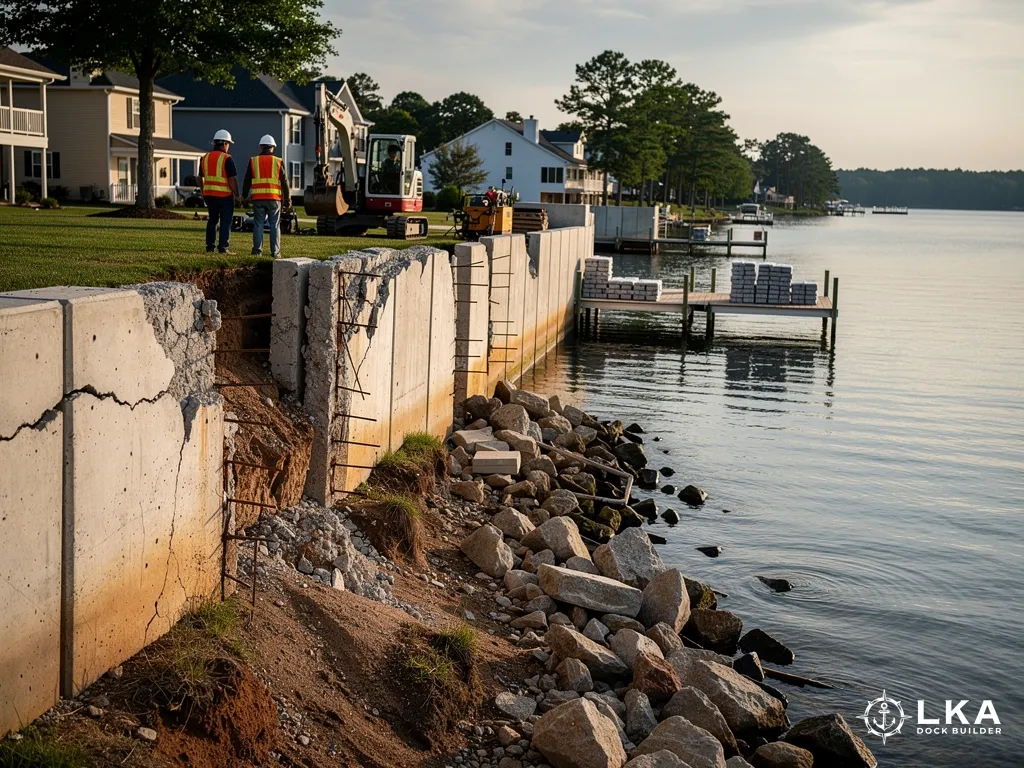
What Are the Most Common Issues That Require Seawall Repair Services in Lake Anna
Common seawall issues at Lake Anna include seawall cracks and bowing, joint separation, leaning, and erosion behind the wall. Signs of seawall failure include visible gaps, soil loss, or tilting sections. LKA Dock Builder provides professional seawall repair services for Lake Anna properties, addressing minor damage before costly replacement becomes necessary.
Key Takeaways
Cracking, joint separation, leaning, and erosion behind the wall are common seawall issues at Lake Anna.
Visible gaps, soil loss, or tilting sections signal seawall damage requiring professional repair services.
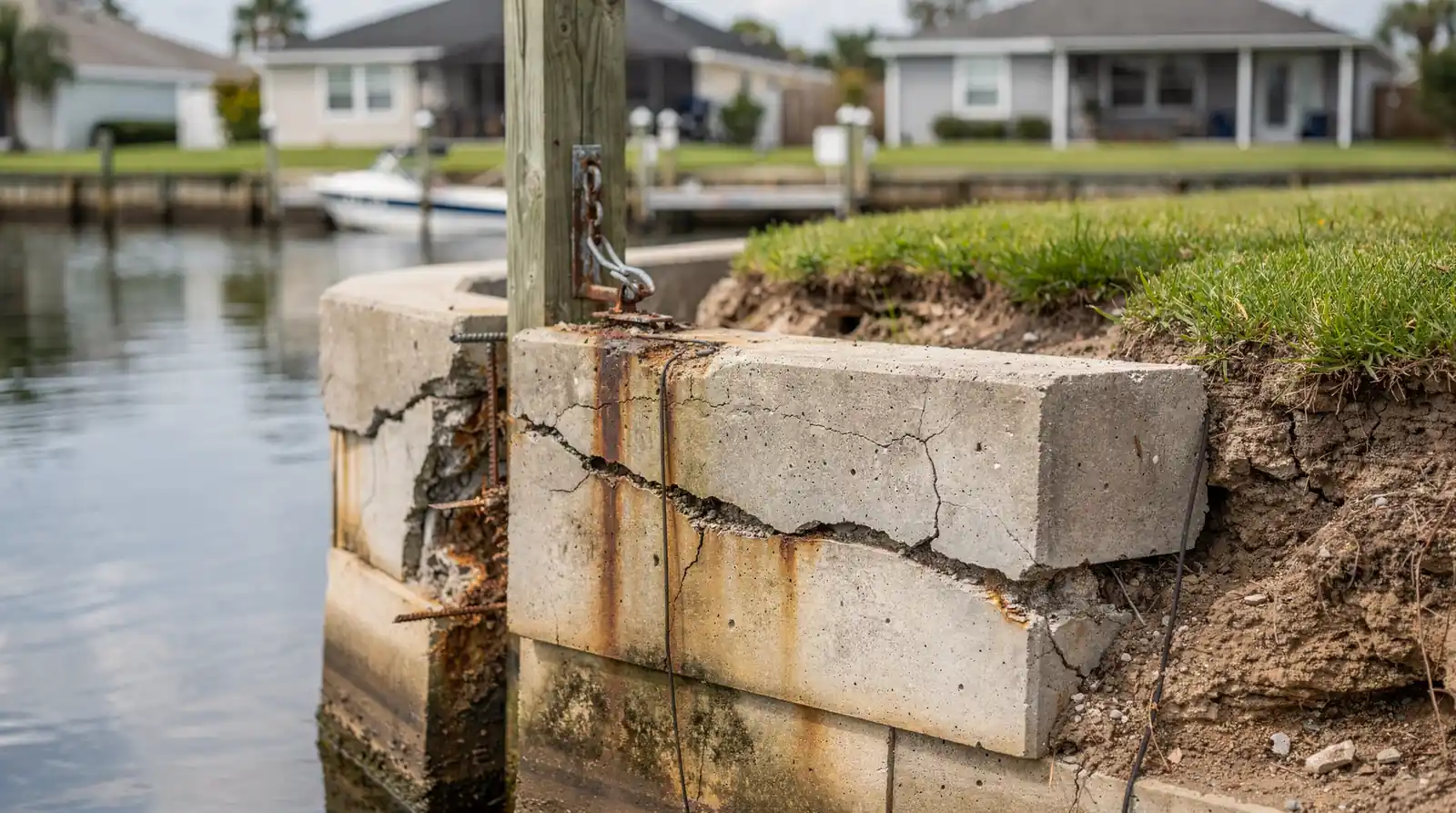
Rust and spalling occur when concrete breaks away, exposing corroded rebar beneath the surface.
Undermining happens when water scours away soil from beneath the seawall’s foundation, causing settling or tilting.
What Are the Most Common Issues That Require Seawall Repair Services?
Seawalls protect Lake Anna waterfront properties against seawall erosion Lake Anna conditions create and other water damage. Several structural problems demand professional seawall repair services before minor deterioration escalates into catastrophic failure. Without timely intervention, property owners risk losing shoreline integrity, compromising lakefront shoreline stabilization, and facing exponentially higher replacement costs.
What Does Seawall Spalling Look Like?
Seawall spalling and rust occur when concrete breaks away, exposing corroded rebar beneath the surface. This deterioration accelerates rapidly once the steel reinforcement meets air and water. Spalling signals that the wall’s internal structure is compromised. Left unchecked, the damage spreads and weakens the entire seawall’s load-bearing capacity.
How Does Undermining Affect Seawall Stability?
Undermining happens when water scours away soil from beneath the seawall’s foundation. Concrete sections then lose support and begin settling or tilting. The process often starts invisibly below the waterline. By the time leaning becomes visible, significant structural damage has already occurred. Lake Anna’s fluctuating water levels make regular underwater inspection essential for catching undermining early.
Why Is Hydrostatic Pressure a Concern?
Hydrostatic pressure builds when water saturates the soil behind a seawall without adequate drainage. This trapped water exerts tremendous force against the structure. Cracks form. Joints separate. The wall eventually bows outward under the relentless pressure. Proper weep holes and backfill drainage prevent this destructive cycle from taking hold.
Can Winter Ice Damage Lake Anna Seawalls?
Winter ice damage ranks among the most frequent problems for Lake Anna property owners. LKA Dock Builder offers custom boathouses, docks, decks, boat lifts and shoreline stabilization. This seasonal stress cracks concrete, displaces panels, and loosens tie-back systems. Annual post-winter inspections help identify ice-related damage before spring rains worsen the deterioration. Homeowners who monitor for these common issues and understand key maintenance steps preserve their seawall investment for decades.
How Can You Spot Early Warning Signs of Failure?
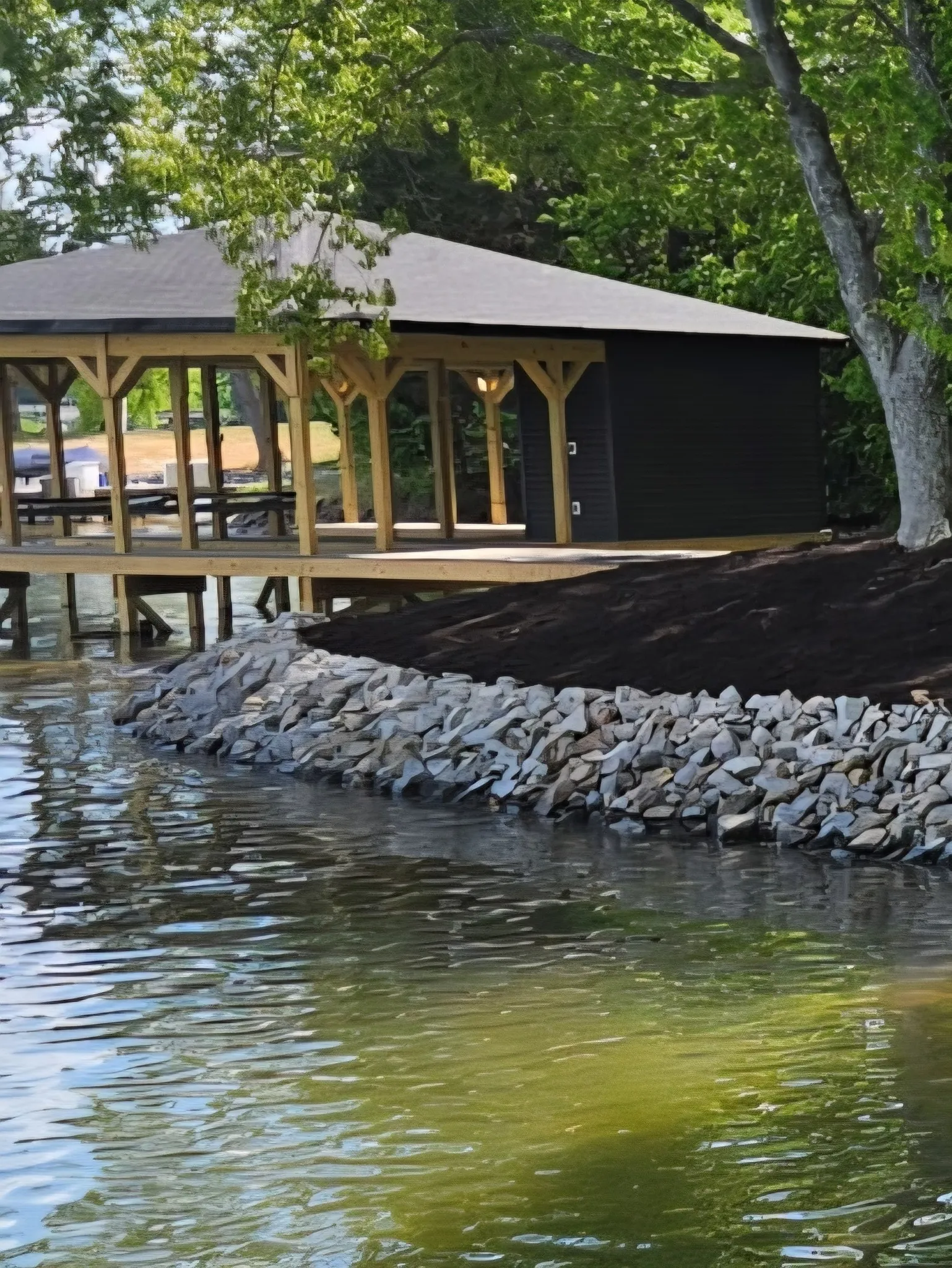
Spotting seawall damage early prevents catastrophic shoreline loss along Lake Anna waterfronts. Property owners who recognize the seawall repair services warning signs avoid the far greater expense of full replacement. Minor issues escalate quickly when water infiltrates structural weak points, and at Lake Anna, fluctuating water levels accelerate that deterioration cycle.
Hairline cracks and joint leaks signal the earliest stage of trouble. According to Seawall Repair vs Replacement: When It’s Time to Rebuild, cracks, joint leaks, and isolated corrosion represent minor damage where repair remains a viable option. The structure is still stable at this point. Left unaddressed, water seeps through those openings, erodes the backfill, and transforms a simple patch job into a structural crisis.
What Does a Failing Seawall Look Like From the Water Side?
Visible concrete deterioration tells an unmistakable story. Spalling, defined as concrete breaking away and exposing corroded rebar, creates a rough, pitted surface that weakens the entire wall section by section. Seawall Replacement Warning Signs identifies this exposed rebar as a clear indicator that the wall’s internal skeleton is deteriorating. Rusted reinforcement cannot hold the concrete together indefinitely.
How Can You Tell If Soil Is Washing Out Behind the Wall?
Loss of soil support behind the seawall often reveals itself before the wall shows obvious damage. Sinkholes, depressions, or soft ground along the top edge mean backfill is migrating through unseen breaches. The same source notes that significant leaning combined with soil loss represents a tipping point: structural movement indicates that the wall is no longer retaining the earth it was built to hold. Once a seawall leans more than a few degrees, replacement becomes the likely path rather than repair. LKA Dock Builder evaluates these soil conditions across Lake Anna properties during every inspection, helping clients distinguish between surface-level fixes and deeper failures before irreversible damage occurs.
When Should You Repair Versus Replace Your Seawall?
Seawall repair addresses minor, localized damage. Replacement becomes necessary when structural integrity fails. The distinction hinges on whether the wall still holds back soil and water effectively. Lake Anna property owners face this decision when cracks, leaning, or erosion first appear. Waiting too long transforms a manageable repair into an emergency replacement.
Seawall repair services handle cracks, joint leaks, and isolated corrosion. These fixes work when the structure remains stable and soil support stays intact. A professional assessment determines whether surface damage signals deeper problems. Small cracks often respond to epoxy injection or patching. Joint leaks typically require sealant replacement. These interventions cost less and extend the wall’s service life by years.
Replacement is required when significant leaning, widespread material failure, or loss of soil support occurs. Structural movement is the tipping point. A wall tilting toward the water indicates failing anchors or eroded backfill. Concrete spalling that exposes corroded rebar across large sections signals material breakdown. Undermining, where water washes soil from beneath the wall, creates voids that compromise the entire structure.
What Are the Warning Signs a Seawall Needs Replacement?
Leaning or bowing sections demand immediate attention. Cracks wider than a quarter-inch suggest structural stress. Sinkholes behind the wall indicate soil loss through failed joints. Water seeping through the wall face points to hydrostatic pressure buildup. Ignoring warning signs leads to catastrophic failure and costly repairs, according to industry guidance from Seawall Replacement Warning Signs.
How Does Structural Movement Determine Repair Versus Replacement?
Movement separates fixable walls from failing ones. A stable wall with surface cracks remains a repair candidate. A wall shifting outward by inches has lost its anchoring capacity. Once the structure moves, patching cracks addresses symptoms, not causes. Replacement restores the engineered connection between wall, soil, and water forces that Lake Anna shorelines demand.
What Steps Should You Take After Discovering Damage?
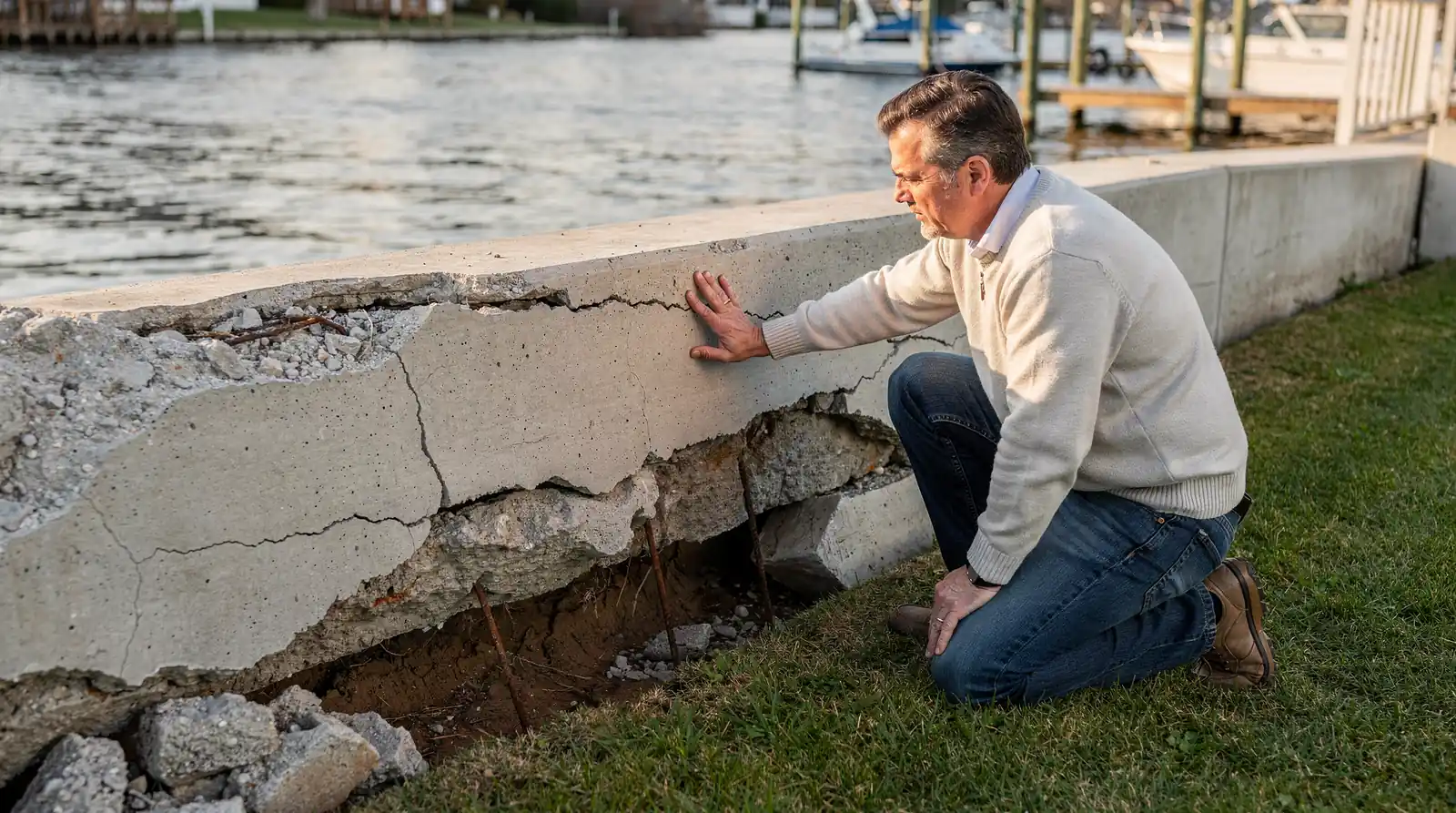
Discovering seawall damage triggers a race against time for Lake Anna property owners. A systematic inspection followed by professional assessment prevents minor deterioration from becoming catastrophic shoreline failure.
How Do You Identify Seawall Damage?
Property owners should first identify the problem by inspecting for common signs of damage. Walk the entire length of the structure looking for cracks, leaning sections, or soil loss behind the wall. Pay close attention to rust stains, spalling concrete, and any areas where water seems to flow through rather than against the barrier. These indicators signal structural compromise that worsens with each passing season.
When Should a Professional Be Contacted?
After identifying damage, reach out to a professional seawall contractor for assessment. LKA Dock Builder evaluates Lake Anna seawalls with specialized knowledge of local soil conditions, water level fluctuations, and winter ice impacts. A trained eye catches subsurface problems invisible to property owners. The company’s seawall repair services address issues ranging from joint failures to complete structural rehabilitation.
What Happens If Repairs Are Delayed?
Delaying repairs creates compounding consequences. Early replacement matters because ignoring warning signs leads to erosion of property and landscaping. Soil washes away behind failing walls, destabilizing yards and threatening mature trees. Damage spreads to docks, boats, and waterfront structures as the seawall loses its protective function. Increased repair costs occur if failure happens during storms, when emergency response commands premium pricing and limited contractor availability. A proactive approach preserves both the shoreline and the investment.
For Lake Anna homeowners facing these challenges, understanding the full scope of seawall installation and repair options provides clarity before committing to a solution.
How Does Professional Repair Protect Your Investment?
Professional seawall repair stops structural decline before it becomes irreversible. Seawalls are the foundation of waterfront property, but like all infrastructure, they have a finite service life. Ignoring warning signs leads to catastrophic failure and costly repairs. A failing seawall usually does not fix itself. Professional intervention halts the damage and restores the barrier that shields a Lake Anna shoreline from wave action, ice pressure, and soil loss.
What Happens If Seawall Damage Goes Unaddressed?
Unchecked deterioration accelerates quickly. Cracks widen. Joints separate. Soil behind the wall begins migrating into the lake. The result is erosion of property and landscaping that undermines patios, walkways, and even structural footings. Lake Anna property owners who delay repairs often face a full replacement at three to five times the cost of early intervention.
How Does Expert Repair Differ From Temporary Fixes?
Temporary patches mask symptoms without addressing root causes. Professional repair targets the underlying failure. Contractors assess hydrostatic pressure buildup, joint integrity, and base undermining before specifying a solution. This approach provides a durable solution against environmental threats that Lake Anna’s fluctuating water levels and winter freeze-thaw cycles create. Properly executed repairs restore load-bearing capacity and extend the wall’s service life by years rather than months.
Professional attention also preserves property value. Waterfront homes with documented repair histories command stronger appraisals than those with deferred maintenance. The investment in expert repair pays out in both immediate protection and long-term equity retention.
FAQ
What are the most common seawall issues at Lake Anna?
Cracking, joint separation, leaning, and erosion behind the wall are the most common issues. Visible gaps, soil loss, or tilting sections signal damage requiring professional repair services.
What does seawall spalling look like?
This deterioration accelerates once the steel reinforcement meets air and water.
How does winter ice damage Lake Anna seawalls?
Winter ice cracks concrete, displaces panels, and loosens tie-back systems. Annual post-winter inspections identify ice-related damage before spring rains worsen the deterioration.
Conclusion
Recognizing the warning signs of seawall damage and acting quickly separates a manageable repair from a full-scale replacement. A professional assessment of cracking, leaning, or soil loss determines the right course of action. Delaying intervention accelerates deterioration, raises costs, and threatens the shoreline investment. Property owners who schedule an inspection after identifying damage protect both their land and their waterfront structure.