
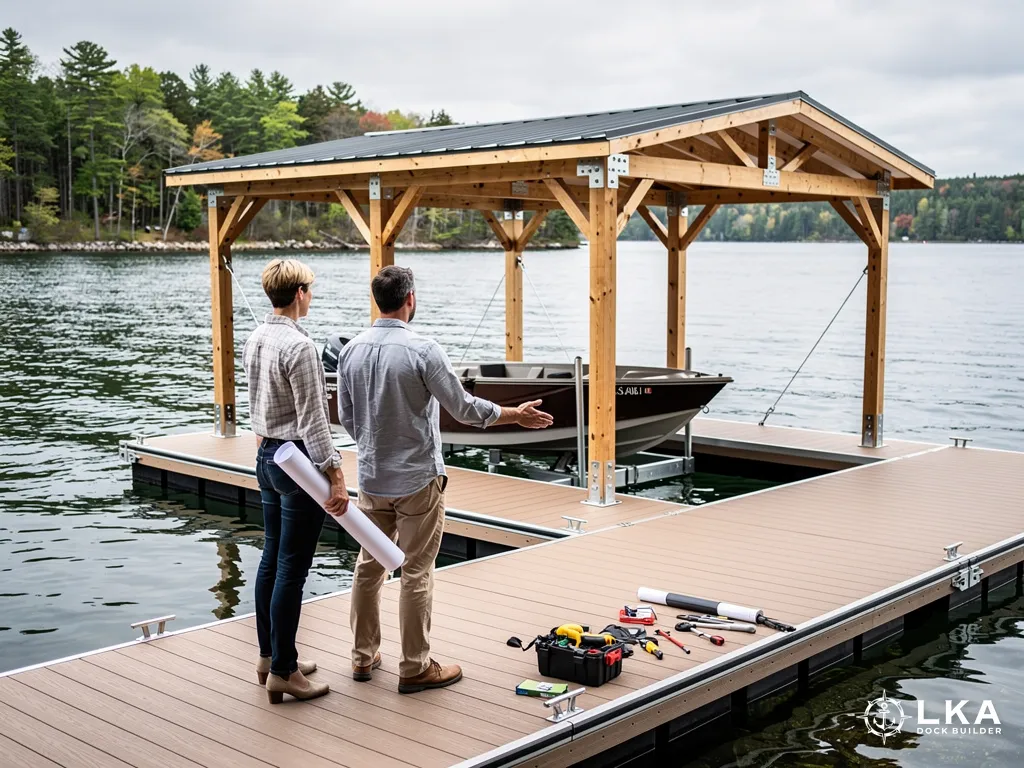
What Factors Should I Consider When Choosing a Boathouse Builder for My Project?
Learning how to choose a boathouse builder demands verifying waterfront-specific engineering, shoreline soil analysis, and heavy-timber construction expertise. Lake Anna homeowners should prioritize a licensed, insured waterfront boathouse contractor with documented local experience and transparent pricing. LKA Dock Builder, a marine construction contractor and Lake Anna boathouse builder, brings 37 years of combined construction experience to custom boathouses, ensuring durable structures engineered for lasting value.
Key Takeaways
Verify waterfront-specific engineering, shoreline soil analysis, and heavy-timber construction expertise before hiring any builder.
Licensed, insured builders with documented local experience and transparent pricing protect against structural failure and costly repairs.
Dominion Energy shoreline process and county building codes require distinct permitting knowledge; skipping vetting risks delays and compliance orders.
Structural engineering checks (load paths, soil bearing capacity, uplift resistance) determine whether a boathouse lasts decades or fails early.
What Should I Look for in a Boathouse Builder?
A boathouse builder must deliver far more than a simple shelter. A boathouse is a smart investment that enhances waterfront property, protects the vessel, and creates space for relaxation and entertainment. Selecting the wrong contractor risks structural failure, costly repairs, and diminished property value.
How Much Experience Should a Boathouse Builder Have?
Builders with several years of experience are more likely to have developed the necessary skills and knowledge to tackle various challenges. Waterfront construction presents unique demands. Soil conditions, fluctuating water levels, and weather exposure test both materials and workmanship. An experienced team anticipates these variables before the first piling goes in.
LKA Dock Builder brings 37 years of combined construction experience to projects throughout the Lake Anna area. That depth of expertise translates into boathouses engineered for decades of service. The company is headquartered in Mineral, VA, and serves the surrounding Lake Anna region, giving its team intimate familiarity with local shoreline conditions and permitting requirements.
What Questions Reveal a Builder’s True Capability?
Asking the right questions separates qualified builders from those who overpromise. A methodical evaluation protects the investment and prevents costly mistakes.
Request a portfolio of completed boathouse projects. Photographs reveal attention to detail, material quality, and design consistency across different shoreline conditions.
Ask about the engineering review process. A reputable builder consults structural engineers for load calculations, wind uplift ratings, and foundation design specific to the site.
Verify local permitting knowledge. Builders unfamiliar with Lake Anna’s regulatory landscape cause delays. LKA Dock Builder manages the full permit process for Mineral and surrounding counties.
Inspect material specifications. Marine-grade fasteners, pressure-treated framing, and composite decking options separate durable structures from those requiring early replacement.
A custom boathouse represents a significant commitment. The builder’s track record with custom boathouse construction on Lake Anna reveals whether that commitment pays off in lasting quality.
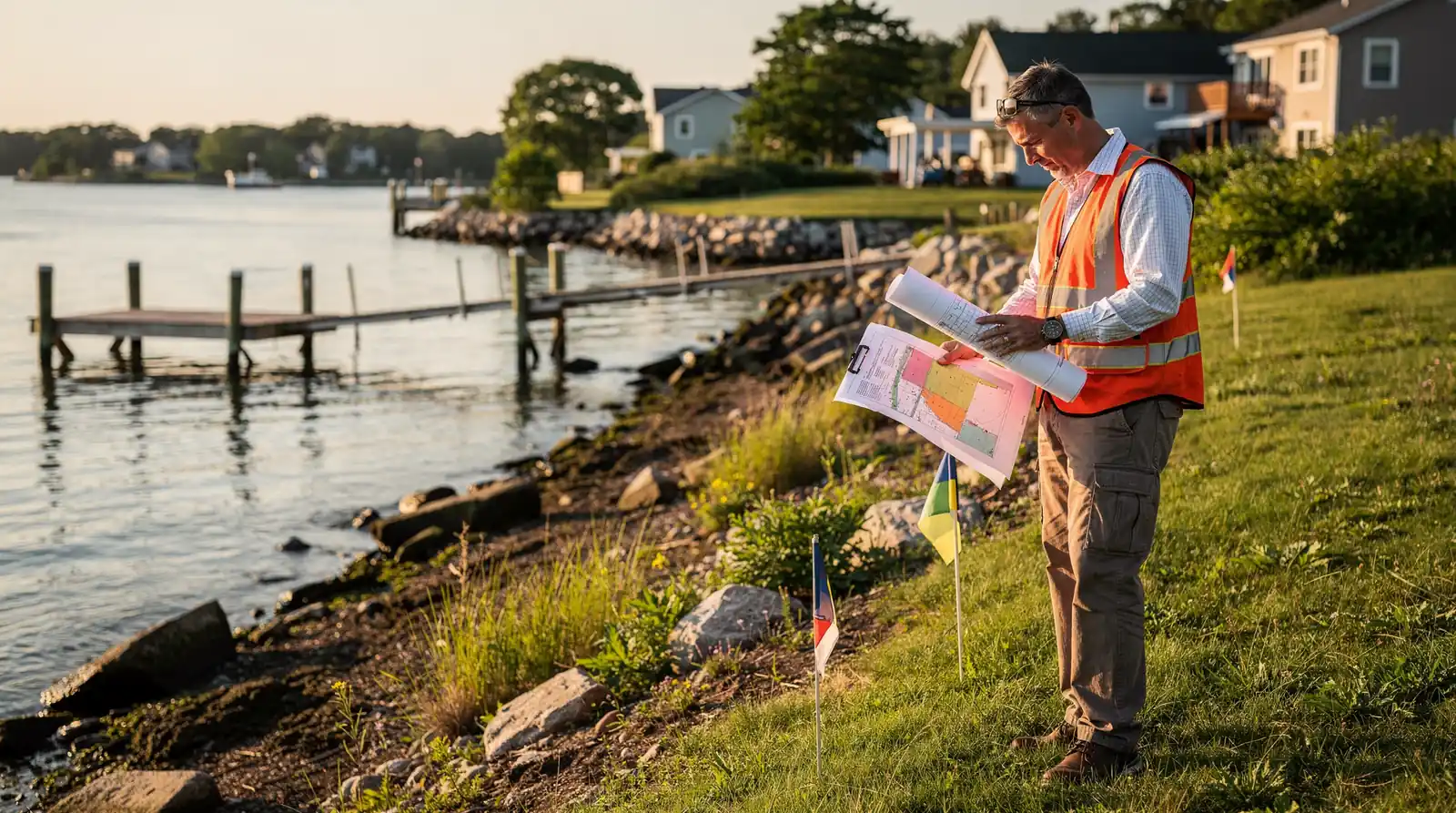
Why Does Shoreline Permitting Experience Matter?
Shoreline permitting experience determines whether a boathouse project proceeds smoothly or stalls under regulatory scrutiny. Lake Anna waterfront construction involves two distinct permitting paths that carry different requirements and consequences. Homeowners who skip this vetting step risk permit rejections, construction delays, and even compliance orders after completion.
Two Permitting Frameworks for Waterfront Projects
A boathouse builder must navigate separate regulatory systems depending on where the structure sits. Dock-attached structures follow the Dominion Energy shoreline process, which requires specialized knowledge to interpret correctly. Standalone residential decks and certain upland features fall under local county building codes instead.
The distinction matters because each framework imposes unique setback rules, environmental reviews, and inspection triggers. The Consumer Federation of America found that home improvement ranked among the top consumer complaint categories nationally in 2024. Most of those complaints centered on the quality and completion of work and on contractor licensure. Permitting mistakes push projects into exactly that category of dispute.
Does a Boathouse Builder Handle Both Dominion Energy and County Permits?
The short answer depends on the contractor’s service footprint. LKA Dock Builder combines 3D design approval, shoreline regulation expertise, and premium materials into a single project workflow. This consolidation keeps permitting from becoming a separate, unmanaged phase that owners must tackle alone.
Builders unfamiliar with Dominion Energy’s shoreline process often submit incomplete applications. Those gaps trigger review cycles that add weeks or months to a timeline. For a lakefront homeowner, that delay means a lost season on the water, not just a paperwork inconvenience.
What Happens When Shoreline Rules Are Overlooked?
Structures built without proper shoreline clearance face enforcement actions that range from fines to mandated removal. Dominion Energy’s process exists to protect lake ecology and navigational safety. Builders who treat it as an afterthought expose clients to liability long after the final invoice clears. Detailed permitting requirements are outlined in the Dock Building Permits Requirements vs Regulations page for Lake Anna properties.
Verifying a builder’s permitting track record protects the investment before the first piling drives into the lakebed.
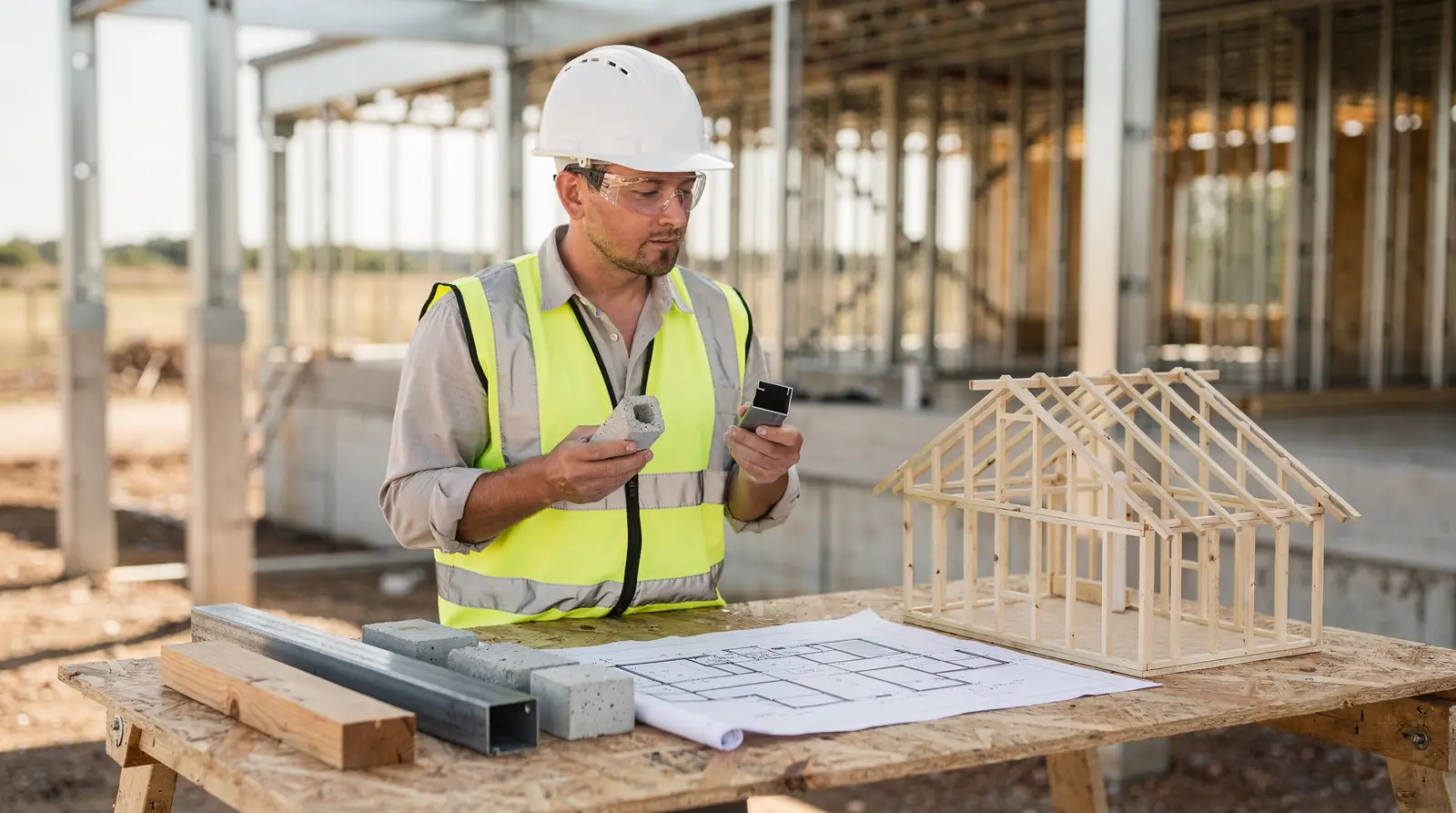
How Do I Evaluate Structural Engineering and Materials?
Structural engineering determines whether a boathouse lasts decades or fails early. Foundations, load calculations, and shoreline soil conditions carry the entire structure’s weight against water, wind, and ice. No finish or premium decking compensates for a foundation that shifts under seasonal stress.
Evaluating a builder’s engineering approach starts with three critical checks.
What engineering questions reveal a builder’s competence?
A qualified builder discusses load paths, soil bearing capacity, and uplift resistance without hesitation. Lakefront projects demand calculations for live loads (people, furniture, stored equipment), dead loads (the structure’s own weight), and environmental loads specific to Lake Anna’s shoreline conditions. Builders who skip soil analysis risk differential settlement that cracks framing and warps door tracks within the first few seasons.
How do material choices affect long-term boathouse costs?
Material selection shapes maintenance budgets for decades. Composite and PVC decking options like Trex and AZEK cost more initially but resist rot, splintering, and fading far better than wood. These materials require significantly less long-term maintenance, an advantage magnified by constant lakefront moisture exposure.
Wood costs less upfront. That lower price comes with an obligation: ongoing staining, sealing, and repair that never stops in a moisture-heavy environment. The savings at purchase disappear into annual upkeep cycles.
LKA Dock Builder combines 3D design approval, shoreline regulation expertise, and premium materials like AZEK and Trex to deliver durable, lake-friendly docks and boathouses. The company’s material selection process confirms every component matches the structural demands of the specific site. Foundations engineered for local soil conditions support decking that withstands UV exposure and freeze-thaw cycles without constant intervention.
What Should the Design and Approval Process Include?
A thorough design and approval process transforms a boathouse concept into a buildable, permitted structure. The process protects the investment by catching conflicts before construction begins. LKA Dock Builder uses a 3D design approval process for each of its core project types, including boathouses, docks, and decks. This visual step lets clients see the finished structure from every angle before a single piling is driven.
What Happens During the Initial Design Consultation?
The consultation establishes the project’s scope and constraints. Site conditions, shoreline setbacks, and intended boat sizes all shape the initial layout. Material preferences enter the conversation early. LKA Dock Builder offers Trex decking across four product lines, Enhance Basics, Enhance Naturals, Select, and Transcend, each at a different price and performance tier. These options affect both the budget and the long-term maintenance profile of the boathouse decking.
How Does the 3D Approval Step Work?
The 3D model becomes the project’s single source of truth. Clients review the structure’s proportions, rooflines, and relationship to the shoreline from multiple viewpoints. Adjustments happen in the model, not in the field. This precision carries through to construction. Hands-on founders with 37 years of combined experience ensure precision workmanship, from laser-straight finishes to meticulous detailing. A well-designed boathouse adds aesthetic appeal and functionality to the waterfront property, and the 3D approval step confirms that the design delivers on both fronts before the boathouse builder in Mineral, VA moves to permitting and construction.
What Common Mistakes Should I Avoid When Hiring?
Selecting a boathouse builder requires avoiding errors that lead to structural failure or financial loss. The most damaging mistake happens before any work begins: accepting a price without a proper site evaluation. A boathouse keeps a boat safe from harsh weather, UV damage, and debris, extending its lifespan and reducing maintenance costs. Without that protection, owners face accelerated deterioration and expensive repairs.
Why Is Accepting a Price Before a Site Visit So Risky?
A price quoted over the phone ignores shoreline soil conditions, water depth, and access constraints. The structure will outlast the contract, the warranty, and sometimes the builder’s phone number. This makes builder selection a decision most property owners only get to make once. A site evaluation reveals hidden costs that a remote estimate never captures.
What Credentials Should a Builder Provide Upfront?
LKA Dock Builder is licensed and insured, providing protection for property owners throughout the construction process. Unlicensed contractors expose clients to liability for injuries and substandard work. Verifying credentials before signing eliminates that risk entirely.
Other common missteps include:
One. Skipping reference checks on completed custom boathouse projects
Two. Overlooking local permitting and shoreline regulations
Three. Choosing materials unsuited for freshwater environments
A thorough vetting process prevents these errors. Working through a dock and boathouse builder checklist, covering credentials, engineering review, permitting knowledge, and material specs, helps homeowners compare any marine construction contractor on equal footing. The company’s custom boathouse construction process includes detailed site assessments and transparent planning. Every step builds toward a structure that endures for decades.
FAQ
What experience should I look for in a boathouse builder?
Builders with several years of experience develop skills for waterfront challenges. LKA Dock Builder brings 37 years of combined construction experience to Lake Anna projects.
What questions reveal a builder’s true capability?
Request a portfolio of completed boathouse projects and ask about the engineering review process. Verify local permitting knowledge and inspect material specifications like marine-grade fasteners.
Why does local permitting knowledge matter for my boathouse project?
Dominion Energy shoreline process and county building codes require distinct permitting knowledge. Conclusion Choosing a boathouse builder comes down to verifying engineering competence, material quality, and a transparent design process. A builder who performs site evaluations, discusses load calculations, and provides 3D approval before construction protects your investment from the start. Verify credentials, check completed projects, and confirm local permitting knowledge. These steps separate a structure that endures seasonal stress from one that requires constant repair.